Blown-In Attic Insulation in La Habra, CA
Energy-Saving Blown-In Attic Insulation for La Habra, CA Homes — Licensed & Insured
Get expert blown-in attic insulation in La Habra, CA. Clean Zone installs R-38 to R-60 insulation for La Habra homes. Call (562) 526-0372 for a free estimate.
Blown-in attic insulation is one of the most effective methods for improving your home’s thermal performance, and for homeowners in La Habra, CA, it addresses a very real and ongoing challenge: managing indoor comfort through the city’s fluctuating seasonal temperatures, dry Santa Ana wind events, and aging housing stock that was never built to today’s energy efficiency standards.
At Clean Zone Attic Insulation, we specialize in blown-in insulation installations designed specifically for the residential and architectural conditions found throughout La Habra and the surrounding communities of the San Gabriel Valley and North Orange County. Whether your home was built during the postwar construction boom of the 1950s or added during La Habra’s growth in the 1980s, our team assesses your attic’s current condition and installs the appropriate material and depth to meet or exceed California Title 24 energy code requirements.
Call us today at (562) 526-0372 to schedule your free attic inspection and blown-in insulation estimate.
Understanding Blown-In Attic Insulation
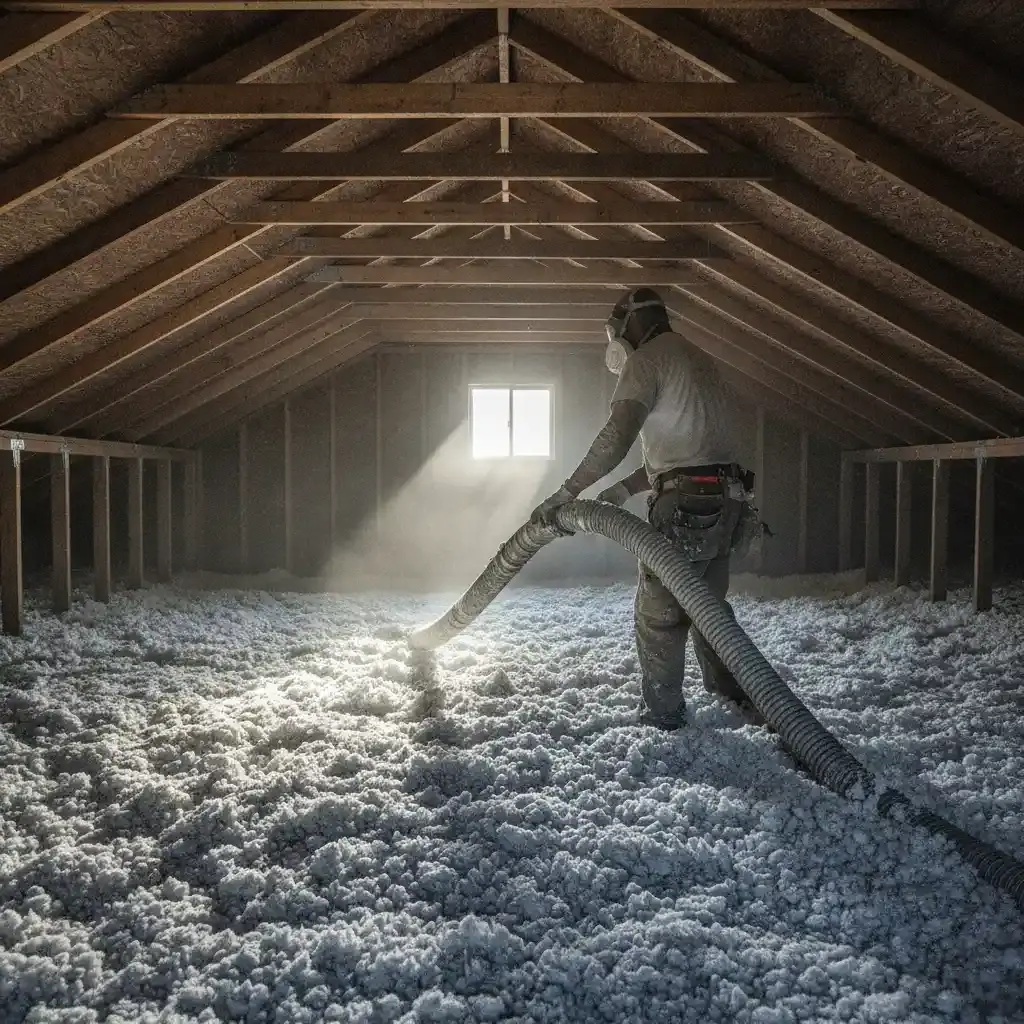
Blown-in attic insulation — also called loose-fill insulation — is a method of installing insulating material by using a specialized blower machine to distribute fibers or granules evenly across an attic floor or into enclosed wall cavities. The result is a dense, seamless blanket of insulation that conforms to joists, irregular framing, and the kinds of oddly-shaped attic corners commonly found in older California ranch homes.
There are two primary materials used in blown-in applications: cellulose and fiberglass. Cellulose is made from recycled paper treated with fire retardants and is particularly effective at resisting air infiltration. Fiberglass loose-fill consists of fine glass fibers and is favored for its moisture resistance and longevity. Both materials are measured and installed to achieve a specific R-value — a measurement of thermal resistance — with the California Energy Commission recommending R-38 to R-60 for attics in climate zones like La Habra’s.
Read moreShow less
Historically, blown-in insulation became widespread after the energy crises of the 1970s, when federal and state programs encouraged homeowners to retrofit their existing homes with insulation. Many La Habra homes built before 1975 received partial insulation upgrades during that era, but those original installations — often achieving only R-11 or R-19 — have compressed and degraded significantly over the intervening decades. Modern building science now recognizes that proper attic insulation is not just a comfort measure but a critical component of a home’s overall building envelope.
La Habra sits at the boundary of Los Angeles and Orange Counties, which means homes here fall under jurisdictions with slightly different permitting and energy code enforcement histories. Tract homes along Lambert Road and Imperial Highway corridors, for example, often share similar framing configurations — low-slope roofs with limited attic clearance — that make blown-in the preferred installation method because it doesn’t require workers to fully navigate a cramped space the way batt insulation does.
Blown-in insulation is also compatible with our attic insulation services, and can be installed following insulation removal when old or contaminated material must be cleared first. It works alongside spray foam insulation for sealing penetrations before the loose-fill layer is applied.
Why Blown-In Attic Insulation Is Needed in La Habra, CA
La Habra’s Climate and Temperature Swings
La Habra falls within California’s Climate Zone 8, which is defined by mild winters, warm-to-hot summers, and periodic extreme heat events. Summer temperatures in La Habra regularly exceed 95°F, and the elevated hillside areas near La Habra Heights frequently trap radiant heat that pushes attic temperatures to between 140°F and 160°F during peak afternoon hours. Without adequate insulation — ideally at R-38 or higher — that superheated attic air transfers directly through the ceiling into living spaces below, forcing air conditioning systems to run longer and consume more electricity.
Santa Ana Wind Events
La Habra is directly in the path of Santa Ana wind corridors that flow down from the inland valleys. These events — which occur most intensely between October and February — dramatically lower relative humidity and drive air infiltration through every gap in a home’s building envelope. During the October 2017 and December 2017 wind events, which affected the broader Los Angeles basin, energy usage in communities like La Habra spiked significantly as heating systems struggled against cold, dry air penetrating poorly insulated attic spaces. Blown-in insulation, especially cellulose, reduces air infiltration by filling gaps and voids that batt insulation cannot reach.
Aging Housing Stock and Degraded Existing Insulation
A significant portion of La Habra’s single-family housing was built between 1945 and 1975 in neighborhoods like the tracts surrounding Portola Drive, the streets north of Whittier Boulevard near the Fullerton border, and the older homes clustered around La Habra City Park. These homes frequently contain original fiberglass batts that have compressed from R-13 down to effective R-values below R-7, or they contain deteriorated blown cellulose from 1970s retrofit programs that has settled and lost density.
Soil and Foundation Movement
La Habra’s expansive clay soils — particularly the Montebello clay loam found throughout the flatland portions of the city — shift seasonally with moisture variation. This movement stresses framing connections and can create new air gaps around ceiling penetrations, recessed lights, and HVAC duct boots that directly compromise attic thermal performance. Homes along the El Camino Real and surrounding residential streets are particularly susceptible because of the shallow foundation depths common in pre-1960 construction.
Energy Cost Pressure in Orange County
Southern California Edison and Pacific Gas & Electric rate increases have made La Habra homeowners acutely aware of energy costs. A properly blown-in attic insulated to R-49 can reduce cooling and heating loads by 20–30%, translating to measurable monthly savings on utility bills that typically run $180–$280 per month for a 1,500–2,000 square foot La Habra home during summer peak months.
Free, no-obligation estimates
Talk to Clean Zone Attic Insulation
Tell us what you need and we’ll take it from there.
Signs You Need Blown-In Attic Insulation in La Habra
Energy and Comfort Indicators
- Summer cooling bills consistently exceeding $220/month for a home under 2,000 square feet
- Rooms on the top floor or with vaulted ceilings that feel 8–12°F warmer than downstairs areas
- Air conditioning running continuously during La Habra’s peak summer afternoons without adequately cooling the home
- Uneven temperatures between rooms served by the same HVAC zone
Visual and Physical Signs in the Attic
- Existing insulation is visibly compressed, thin, or below the top of the ceiling joists
- Insulation depth measuring less than 10 inches (indicating R-values well below California’s recommended R-38 minimum)
- Visible staining, water damage, or pest debris mixed into existing insulation
- Areas of attic floor that are completely bare or have only a thin layer of degraded material
Structural and Indoor Air Quality Signs
- Dusty or musty odors entering living spaces from the ceiling, particularly during Santa Ana wind events
- Visible gaps around recessed lighting, attic hatches, or HVAC penetrations
- Evidence of rodent activity or nesting material in the attic, which contaminates existing insulation
If you observe two or more of these signs, it is strongly advisable to schedule an inspection promptly before the next summer heat season intensifies conditions.
Methods and Approaches for Blown-In Attic Insulation
Cellulose Blown-In Insulation
Cellulose loose-fill is composed of 80–85% recycled paper content treated with borate fire retardants. It achieves an R-value of approximately 3.2–3.8 per inch and excels at filling irregular cavities and reducing air infiltration — an important quality for La Habra homes exposed to Santa Ana wind-driven air pressure differentials. Cellulose is our most frequently recommended material for homes built before 1980 in the central La Habra flatlands.
Fiberglass Loose-Fill Insulation
Fiberglass blown-in offers an R-value of approximately 2.2–2.7 per inch and is particularly well-suited for attics with existing moisture exposure — such as homes near La Habra’s lower-lying areas where roof leaks have historically introduced humidity. It resists mold and does not absorb water, making it a durable long-term choice where moisture is a recurring concern.
Dense-Pack Blown-In for Enclosed Cavities
For La Habra homes with cathedral ceilings or enclosed roof rafter bays — common in mid-century modern designs found in the hillside streets near La Habra Heights — we use a dense-pack method that pressurizes the blown-in material to approximately 3.5 lbs per cubic foot, preventing future settling and achieving consistent R-values in closed spaces.
Blown-In Over Existing Insulation (Top-Up)
When existing insulation is clean and structurally sound but simply insufficient in depth, we perform a top-up installation — adding new blown-in material over the old layer to bring the total to the target R-value. This is a common and cost-effective approach for La Habra homes that received partial insulation upgrades in the 1970s or 1980s.
Blown-In Attic Insulation Cost in La Habra, CA
The cost of blown-in attic insulation in La Habra varies based on attic size, existing conditions, material selected, and the extent of air sealing work required. Below are representative cost ranges for typical La Habra residential projects.
Typical Price Ranges
- Basic blown-in top-up (cellulose or fiberglass), 1,000–1,500 sq ft attic: $900–$1,600
- Full installation with air sealing, 1,500–2,000 sq ft attic: $1,500–$2,800
- Full removal and replacement, 1,500–2,000 sq ft attic: $2,500–$4,500
- Dense-pack for enclosed cavities or cathedral ceilings: $3.00–$5.50 per square foot of cavity area
Key Cost Factors in La Habra
- Attic access difficulty: Homes in La Habra’s hillside areas near La Habra Heights often have limited attic access points, requiring additional labor time.
- Existing contamination: Rodent activity — common in La Habra’s older neighborhoods near open hillside areas — requires removal and sanitation before new insulation is placed, adding $0.50–$1.50 per square foot.
- Material selection: Cellulose is typically $0.10–$0.20 per square foot less expensive than fiberglass at equivalent R-values.
- California utility rebates: Southern California Edison offers rebates for qualifying insulation upgrades. Properly documented installations in La Habra may be eligible for rebates of $0.10–$0.15 per square foot, partially offsetting project costs.
Contact us at (562) 526-0372 for a detailed estimate specific to your La Habra home’s attic dimensions and current conditions.
La Habra Neighborhoods We Serve
Central La Habra — Lambert Road and Whittier Boulevard Corridor
This established residential area features a dense concentration of 1950s–1960s tract homes with low-pitched roofs and attic depths that often limit access. Blown-in is the ideal method here because batt installation is impractical in these confined spaces. Original insulation in these homes is almost universally degraded below R-10.
North La Habra — Near La Habra Heights Border
Homes along the hillside streets approaching La Habra Heights were often custom-built in the 1960s–1980s and feature larger attic footprints with varied framing configurations. These properties benefit from comprehensive air sealing combined with R-49 to R-60 blown-in installations due to greater exposure to downslope Santa Ana wind effects.
East La Habra — Near the Brea and Fullerton Borders
Newer tract developments from the 1980s and 1990s in east La Habra often have existing insulation that is simply under-depth — installed at R-19 or R-30 at the time of construction — and benefit significantly from blown-in top-up installations to meet current R-38 minimums. We also serve neighboring Brea and Fullerton communities with similar housing profiles.
Attic Insulation Maintenance Tips for La Habra Homeowners
- Inspect annually before summer: Each spring, visually inspect your attic for insulation depth and signs of moisture intrusion before La Habra’s summer heat season begins, ideally in April or May.
- Check after Santa Ana wind events: Strong wind events can loosen roof materials and allow water or debris intrusion; inspect your attic after any significant wind event between October and February.
- Keep attic vents clear: La Habra’s dry summers generate fine dust and particulate that can clog soffit vents, reducing airflow and increasing attic temperatures. Clear vents of debris at least once per year.
- Monitor for pest activity: Hillside proximity makes La Habra homes susceptible to rodent intrusion through the roofline. Inspect for droppings or nesting material, which contaminates insulation and requires professional remediation.
- Seal attic hatch edges: Attic hatches are a major air leakage point. Ensure the hatch cover has weatherstripping and at least R-30 of insulation on its upper surface.
- Avoid compressing insulation: If you store items in the attic, use raised walkboards rather than placing boxes directly on blown-in material, which compresses and reduces R-value.
- Schedule a professional inspection every 10 years: Blown-in insulation can settle 15–20% over a decade. A top-up service restores full R-value performance.
Why Choose Clean Zone Attic Insulation in La Habra
Clean Zone Attic Insulation brings targeted expertise in the residential building types, climate conditions, and energy code requirements specific to La Habra and the surrounding North Orange County and San Gabriel Valley communities. We are not a generalist contractor applying a one-size-fits-all approach — our technicians are trained to assess the specific challenges of La Habra’s aging housing stock, hillside exposure conditions, and clay-soil foundation movement that creates recurring air gaps.
Our service portfolio goes beyond blown-in insulation. When a project requires it, we integrate crawl space insulation, crawl space encapsulation, and insulation replacement into a comprehensive whole-home envelope solution. This means you receive a coordinated assessment rather than isolated fixes.
Read moreShow less
We serve homeowners across our full service area including Whittier, Anaheim, Norwalk, and West Covina, bringing the same detailed, location-aware approach to every project. Call us at (562) 526-0372 to discuss your La Habra home’s insulation needs.
FAQ
Frequently Asked Questions About Blown-In Attic Insulation in La Habra, CA
How much does blown-in attic insulation cost in La Habra, CA?
Most La Habra residential projects range from $900 for a basic top-up on a smaller attic to $4,500 or more for a full removal and replacement on a larger home with contamination remediation included. The average La Habra homeowner with a 1,500–1,800 square foot attic pays between $1,500 and $2,800 for a full installation with air sealing.
How long does blown-in attic insulation installation take in La Habra?
A standard blown-in installation on a typical La Habra single-family home takes one day. Projects that include prior insulation removal or extensive air sealing of older-construction penetrations may take one to two full days.
What R-value do I need for my La Habra attic?
La Habra falls in California Climate Zone 8. The California Energy Commission recommends a minimum of R-38 for existing homes and R-49 for new construction or full replacements. Given La Habra’s summer peak attic temperatures — which can reach 150°F or more — we typically recommend targeting R-49 for the best cost-to-comfort return.
Is cellulose or fiberglass blown-in better for La Habra homes?
Both materials perform well in La Habra’s climate. Cellulose is preferred for older homes where air infiltration is a primary concern because it fills voids more completely. Fiberglass loose-fill is preferred for attics with a history of moisture exposure. Our technician will recommend the appropriate material after inspecting your specific attic conditions.
Can blown-in insulation be installed over my existing insulation?
Yes — when existing insulation is clean, dry, and free of pest contamination, a top-up installation is a practical and cost-effective solution. However, if La Habra’s common issues — rodent activity, moisture staining, or compressed deteriorated material — are present, removal and full replacement is recommended before new material is applied.
Do I need a permit for blown-in attic insulation in La Habra?
In most cases, adding blown-in insulation to an existing attic in La Habra does not require a building permit. However, if the project involves significant electrical work around recessed lights or HVAC modifications, a permit may be required. We advise clients based on the specific scope of their project and current La Habra city guidelines.
Are there utility rebates available for blown-in insulation in La Habra?
Yes. Southern California Edison offers Energy Upgrade California rebates for qualifying insulation improvements in La Habra. The amount varies by project scope, but documented installations that bring attic insulation to R-38 or above may qualify. We provide the installation documentation needed to support your rebate application.
How long does blown-in insulation last in a La Habra attic?
Properly installed blown-in insulation typically performs well for 20–30 years. In La Habra’s dry climate, cellulose and fiberglass both maintain their physical properties well if kept dry. We recommend a professional inspection every 10 years to assess settling and determine whether a top-up is needed to restore full R-value.
Get Your Free Blown-In Attic Insulation Estimate in La Habra, CA
If your La Habra home is running high energy bills, struggling to stay cool during summer heat events, or you simply know your attic insulation is aging and underperforming, Clean Zone Attic Insulation is ready to help. We provide free, no-obligation attic inspections and detailed written estimates for all blown-in insulation projects throughout La Habra and the surrounding communities.
Call us today at (562) 526-0372 to schedule your inspection. Our team serves La Habra, La Habra Heights, Brea, Fullerton, Whittier, Anaheim, and all neighboring communities with the same detail-oriented approach to attic insulation. Don’t let another La Habra summer pass with an underinsulated attic costing you comfort and money every single day.
Get in touch
Find insulation help near you
Request a free estimate online or give us a call — our team will follow up quickly.
- Call us(562) 526-0372
- Visit731 N Beach Blvd, La Habra, CA 90631
- HoursMon-Sun 07:00-19:00