Crawl Space Encapsulation in La Habra, CA
Professional Crawl Space Encapsulation in La Habra, CA in La Habra, CA — Licensed, Insured & Locally Owned
Need crawl space encapsulation in La Habra, CA? Clean Zone Attic Insulation offers expert vapor barrier & moisture control solutions. Call 562-526-0372 today.
Crawl space encapsulation is the process of sealing your home’s crawl space from moisture, pests, and outdoor air using heavy-duty vapor barriers, rigid foam insulation, and sealed vents. In La Habra, CA — a city nestled at the base of the Puente Hills along the border of Los Angeles and Orange Counties — the combination of coastal marine layer humidity, clay-heavy soils, and aging mid-century housing stock makes crawl space problems especially common and especially damaging.
At Clean Zone Attic Insulation, we specialize in professional crawl space encapsulation services designed specifically for the conditions La Habra homeowners face. Our team understands the local climate cycles, the soil types beneath La Habra foundations, and the building practices used across the city’s various residential neighborhoods. Whether you’re dealing with musty odors, sagging floors, or visible mold growth under your home, we deliver complete crawl space solutions that protect your property and improve indoor air quality year-round.
Call us today at 562-526-0372 for a professional crawl space evaluation.
Understanding Crawl Space Encapsulation
A crawl space is the shallow, unfinished area beneath many single-story and split-level homes that provides access to plumbing, electrical wiring, and HVAC ductwork. In Southern California, crawl spaces became a standard construction feature during the post-World War II housing boom of the late 1940s through the 1960s — a period that accounts for a large percentage of La Habra’s current residential inventory. Rather than pouring a full concrete slab, builders elevated the floor structure above grade using cinder block or concrete perimeter walls, leaving a gap typically ranging from 18 inches to 4 feet in height beneath the living space.
For decades, conventional wisdom called for vented crawl spaces — installations with screened foundation vents that allowed outdoor air to circulate beneath the home. The theory was that air movement would prevent moisture accumulation. Building science research over the past 25 years has thoroughly debunked this approach. In climates where outdoor humidity regularly exceeds the humidity inside the crawl space — as happens frequently in La Habra during the June through August marine layer season — vented crawl spaces actually import moisture rather than expel it. That imported moisture condenses on cool floor joists, insulation batts, and subfloor sheathing, creating ideal conditions for mold, wood rot, and pest infestation.
Read moreShow less
Crawl space encapsulation solves this problem by converting the space into a controlled environment. The process involves installing a reinforced polyethylene vapor barrier — typically 12 to 20 mils thick — across the entire ground surface and up the foundation walls. Vents are sealed, the space is conditioned with a dehumidifier or tied into the home’s HVAC system, and a rigid access door replaces the original vent or hatch. The result is a clean, dry, sealed environment that no longer exchanges air or moisture with the outside world.
In La Habra specifically, encapsulation is relevant not only to older bungalows and ranch-style homes but also to hillside properties along the Puente Hills foothills where ground moisture migrates laterally through soil and enters crawl spaces even during dry months. Learn more about our crawl space insulation services that complement a full encapsulation project.
Why Crawl Space Encapsulation Is Needed in La Habra, CA
Marine Layer Humidity from the Pacific
La Habra’s elevation of approximately 400 to 700 feet above sea level places it at the edge of the marine layer’s inland reach. From late May through early August — a period locals call “June Gloom” — marine fog regularly pushes inland through the Whittier Narrows and the La Habra Pass, blanketing the city with relative humidity levels that routinely reach 85 to 95 percent in the early morning hours. This sustained high-humidity period, repeated daily for weeks at a time, drives moisture through unprotected crawl space vents and into the structural wood below your floors. Studies by the Building Science Corporation indicate that wood framing exposed to relative humidity above 80 percent for extended periods begins to support mold growth within 48 to 72 hours. In La Habra, that threshold is crossed on a seasonal, predictable basis.
Expansive Clay Soils and Ground Moisture
The soils underlying much of La Habra are classified as Montebello loam and Whittier clay loam — expansive clay-bearing soils that retain water long after rainfall events and release it slowly through evaporation. When the ground beneath a crawl space holds moisture, that moisture evaporates upward into the enclosed space. Without a vapor barrier, an unprotected crawl space in La Habra can generate as much as 10 to 20 gallons of water vapor per day through ground evaporation alone during the wet season. This number is not hypothetical — it is a well-documented characteristic of expansive clay soil behavior in Los Angeles and northern Orange County.
Rainfall Events and Hillside Drainage
La Habra has experienced multiple significant rainfall events in recent years that have tested residential drainage infrastructure. The atmospheric river storms of January and February 2023 delivered more than 8 inches of rain to the La Habra area within a two-week period, overwhelming many older drainage systems and causing surface water to pool against foundation walls throughout neighborhoods like Rancho La Habra and the hillside areas along Lambert Road near the Puente Hills boundary. Water that pools against foundation walls infiltrates crawl spaces within hours, saturating existing insulation and creating conditions for mold that can persist for months without remediation.
Aging Housing Stock and Original Vapor Barriers
A significant portion of La Habra’s residential housing was built between 1945 and 1975. Many of these homes were originally fitted with thin 4-mil polyethylene sheeting as ground covers — a standard that is wholly inadequate by modern building science standards. After 50-plus years, these original vapor barriers are torn, degraded, or missing entirely, offering no meaningful moisture protection. Homeowners in neighborhoods like La Habra Heights-adjacent properties on Palm Street and residential blocks off Harbor Boulevard frequently discover that their homes have been accumulating moisture damage for years without any visible above-floor symptoms.
Pest and Rodent Activity
La Habra’s proximity to the Puente Hills open space corridor creates ongoing pressure from rodents, including roof rats and Norway rats, that seek shelter in crawl spaces during the cooler months of November through February. These animals damage existing vapor barriers, duct insulation, and wiring while importing nesting materials that further trap moisture. Our rodent proofing services are frequently paired with crawl space encapsulation to deliver a complete solution.
Free, no-obligation estimates
Talk to Clean Zone Attic Insulation
Tell us what you need and we’ll take it from there.
Signs You Need Crawl Space Encapsulation in La Habra
Moisture and Air Quality Indicators
- Musty or earthy odors inside the home, particularly in ground-floor rooms or near floor vents
- Condensation on cold-water pipes running through the crawl space
- Visible mold or mildew on subfloor sheathing, floor joists, or existing insulation
- Allergy symptoms or respiratory irritation that worsens during La Habra’s June Gloom season
- Elevated indoor humidity readings above 55 percent during morning hours
Structural Warning Signs
- Soft, spongy, or squeaky floors, particularly in hallways and near load-bearing walls
- Sagging subfloor or floor joists visible from inside the crawl space
- Gaps appearing between hardwood floor boards as wood shrinks and swells with seasonal moisture changes
- Doors and windows that stick seasonally, indicating subfloor movement
Crawl Space Visual Indicators
- Standing water or wet soil visible in the crawl space after rain events
- Torn, bunched, or missing ground cover sheeting
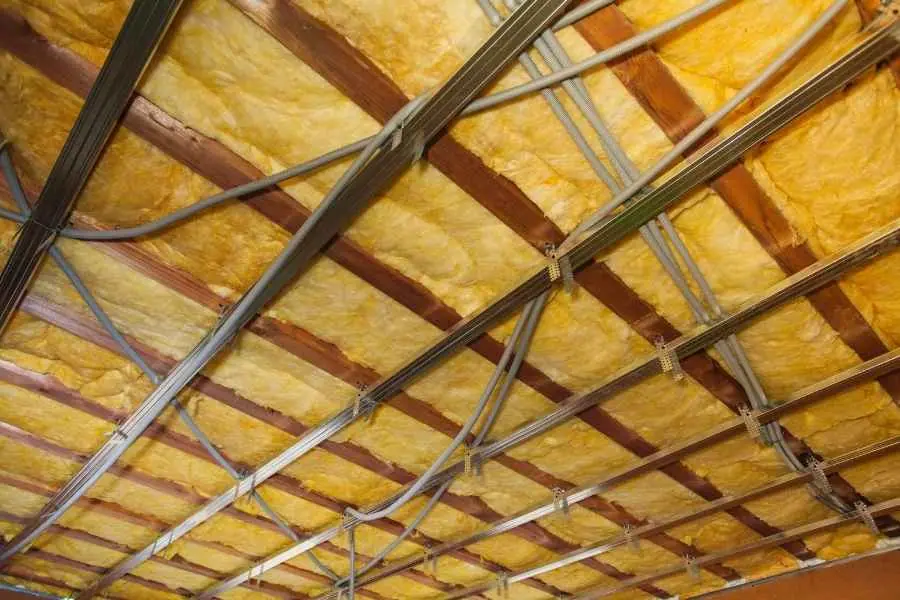
- Fallen or water-stained fiberglass batt insulation hanging from floor joists
- Rodent droppings, nesting material, or damaged ductwork
If you observe two or more of these symptoms, prompt action is strongly advised. Moisture damage compounds quickly during La Habra’s marine layer season.
Crawl Space Encapsulation Methods and Approaches
Full Encapsulation with Conditioned Air
The most comprehensive solution, full encapsulation involves sealing the crawl space and connecting it to the home’s conditioned air supply. This method is ideal for La Habra homes with HVAC systems that have sufficient capacity and where the crawl space is used for duct distribution. By conditioning the crawl space air, temperature and humidity are maintained at the same level as the living space above, completely eliminating the conditions that support mold and wood degradation.
Full Encapsulation with Dedicated Dehumidifier
For homes where connecting to the HVAC system is not practical — common in older La Habra bungalows with original duct configurations — a dedicated crawl space dehumidifier provides standalone moisture control. The dehumidifier runs on a humidistat-controlled cycle and drains via a condensate line routed to a floor drain or through the foundation wall. This is the most commonly recommended method for mid-century homes in La Habra.
Partial Encapsulation with Enhanced Vapor Barrier
For homes with limited moisture intrusion and no structural damage, installing a heavy-duty 20-mil reinforced vapor barrier without full vent sealing provides a meaningful upgrade over inadequate original ground covers. This approach is used primarily in newer La Habra homes built after 1985 with functional drainage and better-sealed foundations.
Encapsulation Combined with Crawl Space Insulation
After encapsulation, rigid foam board or spray foam insulation can be applied to the foundation walls to thermally isolate the crawl space from outside temperatures. This combination approach delivers the greatest energy efficiency improvement and is particularly effective in La Habra homes where HVAC ducts run through the crawl space. Explore our spray foam insulation services for crawl space wall applications.
Crawl Space Encapsulation Cost in La Habra, CA
Understanding crawl space encapsulation cost in La Habra, CA requires accounting for several variables specific to the local housing market and site conditions. Below are typical price ranges based on our experience serving La Habra homeowners.
Typical Price Ranges
- Basic vapor barrier installation (4-mil to 6-mil, existing space is clean): $1,200 – $2,500
- Standard full encapsulation with 12-mil barrier and vent sealing: $3,000 – $5,500
- Premium full encapsulation with 20-mil reinforced barrier, dehumidifier, and drainage matting: $5,500 – $9,000
- Full encapsulation with crawl space wall insulation added: $7,000 – $12,000
- Debris removal and remediation added to encapsulation: Add $800 – $2,500 depending on contamination level
Read moreShow less
Cost Factors Specific to La Habra
Crawl space height significantly affects labor costs — the shallow 18-inch crawl spaces found under many original La Habra tract homes built along West La Habra Boulevard require more labor hours than standard-height spaces. Hillside properties along the Puente Hills boundary frequently require additional drainage preparation due to lateral ground moisture, adding $500 to $1,500 to project costs. Homes with extensive rodent damage may require full debris remediation before encapsulation materials can be installed.
Return on Investment
Encapsulated crawl spaces in La Habra typically show measurable energy bill reductions of 10 to 20 percent annually by reducing conditioned air loss through the floor system. The protection of structural wood and subfloor materials from moisture damage can prevent repair costs that range from $8,000 to $30,000 for floor joist replacement — making encapsulation one of the highest-value home investments available to La Habra homeowners.
Call 562-526-0372 for a detailed, no-obligation cost estimate tailored to your property.
La Habra Neighborhoods We Serve
Rancho La Habra
This established neighborhood in the eastern section of La Habra features primarily 1960s and 1970s ranch-style homes with wide, accessible crawl spaces. The area’s proximity to the Coyote Creek flood corridor makes post-storm moisture intrusion a recurring concern. We frequently perform encapsulation projects combined with drainage matting installation for homes in this neighborhood.
La Habra Heights Transition Zone
Properties along the western hillside edges of La Habra adjacent to the unincorporated La Habra Heights area feature older custom homes on sloped lots. These properties present complex encapsulation challenges due to multi-level crawl space configurations and significant lateral ground moisture from uphill drainage. Reinforced 20-mil barriers with mechanical fastening are our standard specification here.
Central La Habra (Harbor Boulevard Corridor)
The older residential blocks surrounding the Harbor Boulevard commercial corridor contain La Habra’s earliest housing stock, with many homes dating from the 1940s and early 1950s. Original vapor barriers in these properties are almost universally degraded and require full removal before new encapsulation materials are installed. Our attic cleaning service is frequently bundled with crawl space work on these older properties.
Lambert Road Hillside Properties
Homes situated on the elevated terrain north of Lambert Road near the Puente Hills open space experience the highest levels of rodent pressure in La Habra. Encapsulation projects here routinely include comprehensive rodent exclusion as a first phase before vapor barrier installation.
Crawl Space Maintenance Tips for La Habra Homeowners
- Inspect your crawl space access point twice yearly — ideally in October before the rainy season begins and again in March after winter storms. Look for pooling water, torn barrier sections, or pest activity.
- Check your dehumidifier’s drainage line monthly during La Habra’s marine layer season (May through August) to confirm it is flowing freely and the unit is cycling on and off normally.
- Clear vegetation from foundation vents and access hatches year-round. La Habra’s mild climate supports fast-growing ground cover that can obstruct drainage and create pest harborage points against the foundation.
- After any rainfall event exceeding 1 inch in 24 hours — a threshold exceeded multiple times during Southern California atmospheric river events — visually check for water entry near foundation vents and low points of your crawl space floor.
- Monitor indoor humidity with a hygrometer placed in a ground-floor room. If readings exceed 55 percent regularly during morning hours, have your crawl space dehumidifier system inspected.
- Maintain gutters and downspout extensions so that roof runoff is discharged at least 4 feet from the foundation — especially important for La Habra homes on clay-heavy lots where water does not percolate quickly.
- Do not store organic materials — cardboard boxes, wood scraps, or bags of mulch — in or directly against the crawl space access hatch. These materials attract pests and hold moisture against the foundation.
Why Choose Clean Zone Attic Insulation for Crawl Space Encapsulation in La Habra?
Clean Zone Attic Insulation is a professional insulation and crawl space contractor with deep experience serving the specific conditions of La Habra and surrounding communities in Los Angeles and Orange Counties. Our technicians understand the difference between a hillside La Habra property with lateral moisture intrusion and a flat-lot ranch home with ground evaporation issues — and we specify the right materials and methods for each situation rather than applying a one-size-fits-all approach.
We are fully equipped to handle every phase of a crawl space encapsulation project in-house, from initial debris removal and pest exclusion through vapor barrier installation and dehumidification setup. Our complete service lineup — including attic insulation, blown-in insulation, fiberglass insulation, and rodent proofing — means La Habra homeowners can address every component of their home’s envelope with a single trusted contractor.
Read moreShow less
We provide detailed written estimates, clear project timelines, and transparent communication throughout every project. Our goal is a crawl space that stays dry, clean, and pest-free for the long term — not a quick fix that fails in the next rainy season. Call us at 562-526-0372 to schedule your professional assessment.
FAQ
Frequently Asked Questions About Crawl Space Encapsulation in La Habra, CA
How much does crawl space encapsulation cost in La Habra, CA?
Most La Habra homeowners pay between $3,000 and $9,000 for a complete crawl space encapsulation project, depending on the size of the space, the condition of existing materials, and whether a dehumidifier and drainage components are included. Smaller homes with clean crawl spaces may come in at the lower end of this range, while larger ranch-style homes or properties with significant moisture or pest damage will fall toward the upper end. We provide detailed, itemized estimates at no charge after an on-site inspection.
How long does the encapsulation process take for a typical La Habra home?
Most standard encapsulation projects in La Habra are completed in 2 to 3 days. Larger properties or those requiring extensive remediation of existing moisture damage or rodent debris may take 3 to 5 days. We schedule projects to minimize disruption to your household and provide a firm timeline before work begins.
Is crawl space encapsulation worth it in La Habra’s climate?
Yes — La Habra’s combination of marine layer humidity, clay soils, and aging housing stock makes encapsulation one of the most cost-effective home improvements available locally. The protection against wood rot, mold, and pest infestation that encapsulation provides typically far outweighs the upfront investment when measured against the cost of structural repairs to floor joists, subfloor sheathing, or HVAC ductwork damaged by uncontrolled moisture.
Will encapsulation eliminate the musty odor coming from my floors?
In most cases, yes. Musty odors from below the floor are almost always caused by mold or mildew growth on damp wood surfaces in the crawl space. Once moisture is controlled through encapsulation and the affected surfaces are treated or replaced, the odor dissipates over days to weeks as the space dries out and stabilizes.
Can I encapsulate my crawl space if it has standing water after rain?
Standing water must be addressed before encapsulation materials are installed. Our process includes evaluating the source of water intrusion — whether from surface drainage, high groundwater, or foundation wall seepage — and implementing appropriate drainage solutions before the vapor barrier is placed. La Habra’s January and February rainy season often reveals drainage issues that need to be corrected as part of a complete encapsulation project.
Do I need to encapsulate if my La Habra home was built recently?
Homes built after approximately 2000 typically have better foundation drainage and more adequate ground covers than older La Habra properties, but they are not immune to crawl space moisture problems. If your newer home is located on a hillside lot, near a drainage swale, or in a low-lying area, an inspection is still worthwhile. Dehumidifier additions to existing but inadequate vapor barriers are a common service request for homes built in the 1990s and 2000s.
What is the difference between a vapor barrier and full encapsulation?
A vapor barrier is a single component — the polyethylene sheeting placed on the crawl space floor. Full encapsulation is a complete system that includes the vapor barrier, foundation wall coverage, sealed vents, a conditioned or dehumidified environment, and a proper access door. A vapor barrier alone provides partial protection; full encapsulation eliminates virtually all moisture exchange between the crawl space and the outdoor environment.
Do you offer crawl space services alongside attic work in La Habra?
Yes. Many La Habra homeowners bundle crawl space encapsulation with attic insulation upgrades or attic cleaning services to address the entire building envelope in a single project. Combined projects often provide scheduling efficiencies and a more complete picture of your home’s moisture and energy performance.
Get Your Crawl Space Encapsulation Estimate in La Habra Today
If your La Habra home has an unencapsulated or poorly protected crawl space, every marine layer season and every winter rainfall event is adding to the moisture load beneath your floors. The longer moisture problems go unaddressed, the more expensive the eventual repairs become — and in La Habra’s clay-soil, high-humidity environment, damage progresses faster than many homeowners expect.
Clean Zone Attic Insulation is ready to evaluate your crawl space, explain exactly what work is needed, and provide a clear, written estimate with no pressure and no surprises. We serve all La Habra neighborhoods and surrounding areas throughout Los Angeles and northern Orange County.
Call us at 562-526-0372 today to schedule your professional crawl space inspection. Our team is available to answer your questions and arrange a convenient appointment time that works with your schedule. Protect your home from the ground up — with Clean Zone Attic Insulation.
Get in touch
Find insulation help near you
Request a free estimate online or give us a call — our team will follow up quickly.
- Call us(562) 526-0372
- Visit731 N Beach Blvd, La Habra, CA 90631
- HoursMon-Sun 07:00-19:00