Insulation Materials & Types in La Habra, CA
Energy-Saving Insulation Materials & Types in La Habra for La Habra, CA Homes — Licensed & Insured
Compare insulation materials for La Habra, CA homes — R-values, costs, climate fit, and expert tips. Free assessment from Clean Zone Attic Insulation.
Choosing the right insulation material for your La Habra home is more than a budget decision — it’s a performance decision shaped by where you live. La Habra sits in Los Angeles County’s inland edge, where summer temperatures regularly climb into the upper 90s°F, while coastal marine air from the Pacific creates mild but occasionally humid conditions. Attic spaces can reach 140–160°F on peak summer days, placing enormous strain on cooling systems and poorly matched insulation materials.
R-value measures thermal resistance — the higher the number, the better a material resists heat transfer. California’s Title 24 energy code recommends a minimum of R-38 for attics in La Habra’s Climate Zone 9, though many older homes fall well below that threshold. Wildfire risk in nearby hillside areas also makes fire-resistance ratings an important consideration when selecting materials.
Read moreShow less
This guide breaks down every major insulation material available to La Habra homeowners — covering R-values, performance in local conditions, ideal applications, and installed cost ranges — so you can make a fully informed decision before any work begins.
Understanding Insulation Types for La Habra Homes
La Habra homeowners have access to six primary categories of insulation, each with distinct performance characteristics, installation methods, and price points. Understanding how these materials behave in Southern California’s specific climate is essential before committing to any one option.
La Habra falls within California Climate Zone 9, governed by Title 24 energy standards that set minimum R-value requirements for attics, walls, and floors. The city’s housing stock skews toward mid-century construction — many homes built between the 1950s and 1980s — meaning inadequate or degraded insulation is extremely common. Older fiberglass batts may have settled or become moisture-damaged over decades, and many homes were built before modern energy codes existed.
Read moreShow less
Construction type matters too. Wood-framed homes with standard 2×4 or 2×6 wall cavities accommodate different materials than homes with concrete block or stucco exteriors. Vented attics, the most common attic type in La Habra, benefit from blown-in or batt materials installed at the attic floor, while unvented (conditioned) attic designs call for spray foam applied directly to the roofline.
Humidity from coastal air, the region’s wildfire risk, and the high demand placed on cooling systems all influence which insulation category delivers the best long-term value for La Habra households. The sections below explore each material in detail.
How La Habra’s Climate Affects Your Insulation Material Choice
La Habra’s position in Climate Zone 9 means your insulation must handle intense summer heat as its primary job. Attic temperatures between 140–160°F during July and August demand high-performance materials at the attic floor or roofline — not just minimum-code installations. If your home was built before 1980, there is a strong likelihood your attic currently falls below the R-38 minimum required by modern Title 24 standards.
Coastal proximity introduces occasional moisture-laden marine air, making vapor management an important secondary consideration. Materials like closed-cell spray foam, mineral wool, and XPS foam board handle moisture well. Standard fiberglass batts or cellulose left unprotected in humid conditions can lose effectiveness or foster mold growth over time.
Read moreShow less
For homes in or near La Habra Heights or hillside areas with elevated wildfire risk, fire-resistant materials like mineral wool and spray foam offer meaningful additional protection over standard fiberglass products.
Decision guide by situation: For attic upgrades in older homes, blown-in cellulose or fiberglass is the most cost-effective path to meeting R-38. For new construction or full renovations, mineral wool batts or spray foam deliver the best long-term performance. For crawl spaces and moisture-prone areas, closed-cell spray foam or XPS rigid boards are preferred. For wall cavities during remodels, mineral wool or open-cell spray foam balance performance, fire resistance, and acoustics. Matching the right material to your specific situation — rather than defaulting to the cheapest option — is the key to lasting energy savings.
Free, no-obligation estimates
Talk to Clean Zone Attic Insulation
Tell us what you need and we’ll take it from there.
Insulation Materials Available in La Habra, CA
Spray Foam Insulation
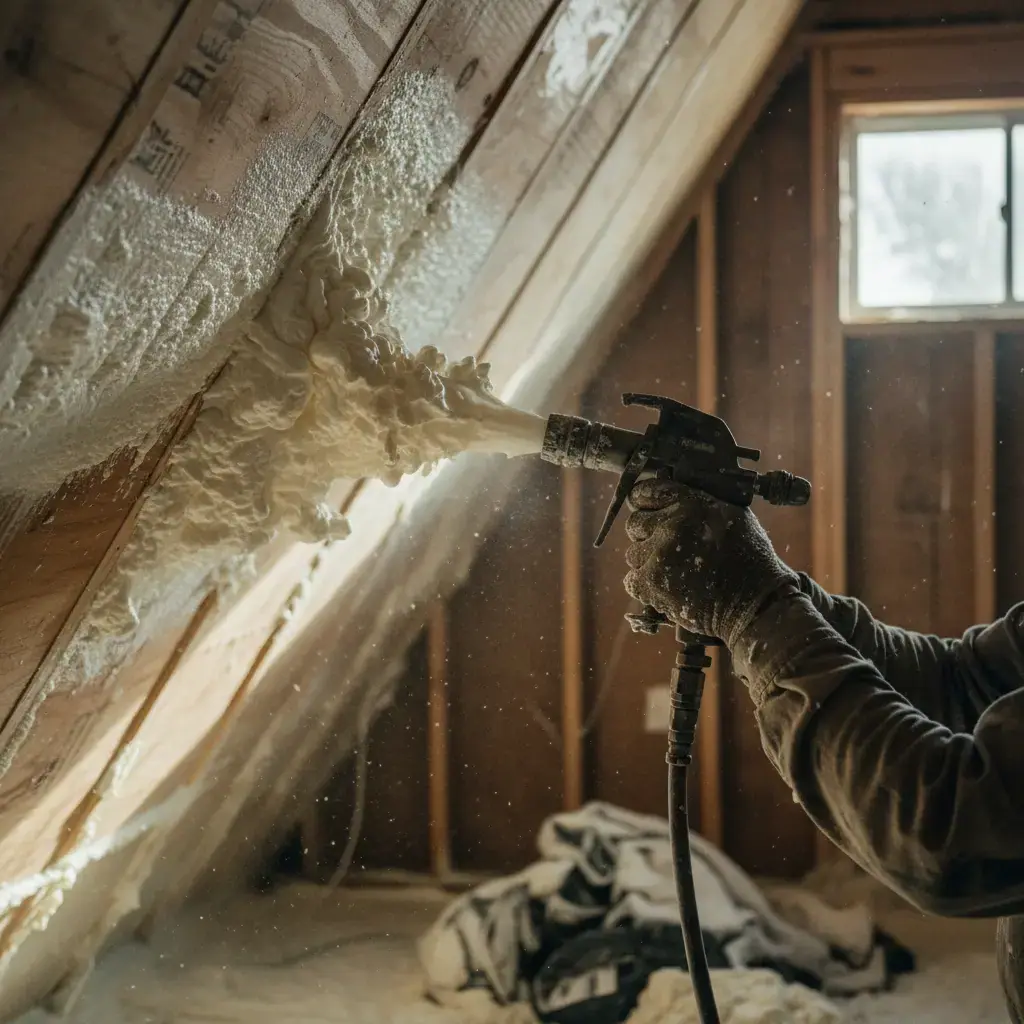
Spray polyurethane foam (SPF) is applied as a liquid that expands and hardens, creating an air-tight thermal and moisture barrier simultaneously. It comes in two forms: open-cell (R-3.5 to R-3.7 per inch) and closed-cell (R-6 to R-7 per inch). For La Habra’s extreme attic temperatures and occasional coastal humidity, closed-cell spray foam is especially effective — it blocks air infiltration and resists moisture vapor. Open-cell foam offers excellent soundproofing at a lower cost. Best applications include unvented attic rooflines, rim joists, and hard-to-reach cavities. Pros: superior air sealing, mold resistance, longest lifespan. Cons: highest installed cost, requires professional application. Approximate installed cost: $1.50–$4.50 per square foot depending on type and thickness.
Learn moreBlown-In (Loose-Fill) Insulation
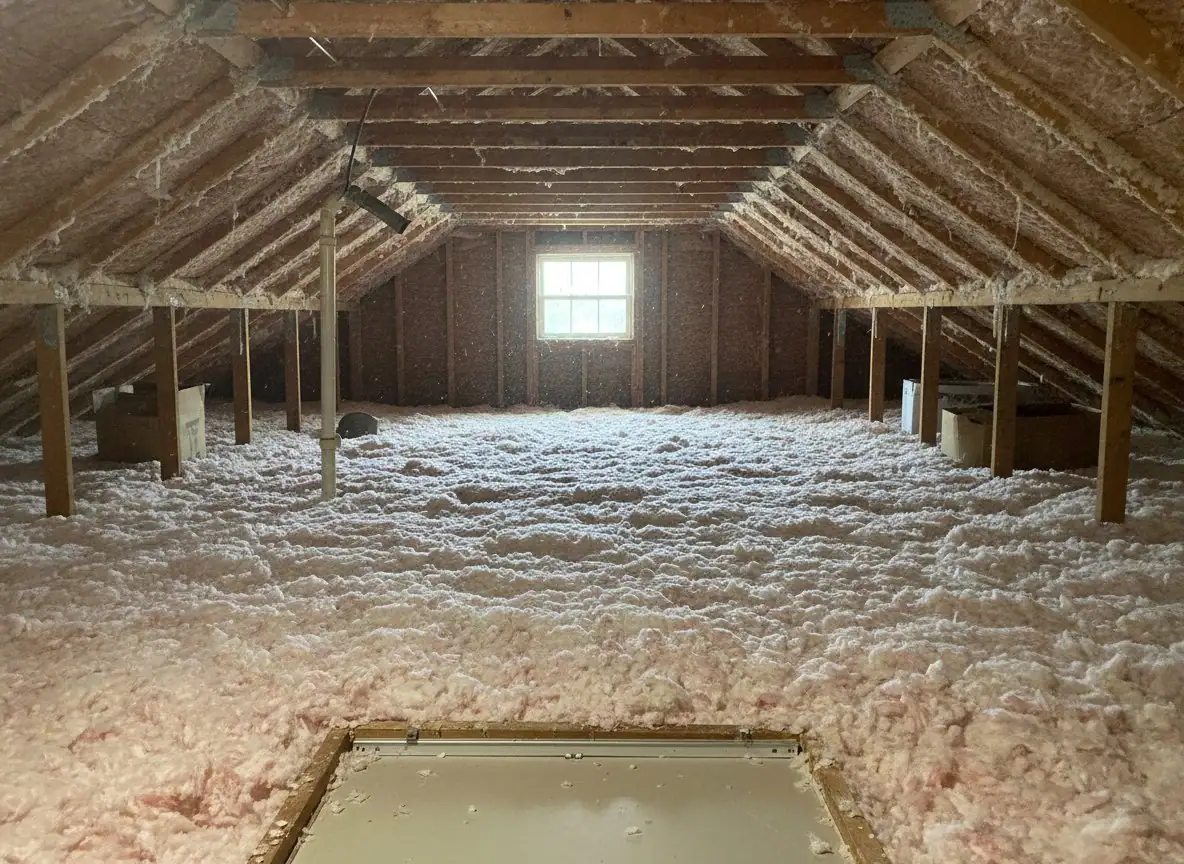
Blown-in insulation — available in fiberglass or cellulose — is machine-blown into attic spaces or existing wall cavities through small access holes. It conforms to irregular shapes, covers joists thoroughly, and is one of the most cost-effective ways to bring an older La Habra home up to Title 24’s R-38 attic standard. Fiberglass loose-fill provides R-2.2 to R-2.9 per inch; cellulose reaches R-3.2 to R-3.8 per inch. For La Habra attics with existing insulation that has settled below code, blown-in can be added directly on top. Pros: fast installation, good coverage, suitable for retrofit projects. Cons: can settle over time, requires vapor control in humid conditions. Approximate installed cost: $1.00–$2.50 per square foot.
Fiberglass Batt Insulation
Fiberglass batts are the most widely recognized insulation product — pre-cut panels of spun glass fiber designed to fit between standard stud and joist spacing. R-values range from R-11 (3.5-inch batt) to R-38 (10-inch batt). In La Habra’s vented attics and new-construction wall cavities, batts are a budget-friendly baseline option. However, proper installation is critical — gaps, compression, or misalignment significantly reduce real-world performance. In humid coastal air, faced batts with a vapor retarder provide added protection. Pros: widely available, low material cost, DIY-friendly in some applications. Cons: air gaps reduce effectiveness, can absorb moisture if improperly installed. Approximate installed cost: $0.50–$1.50 per square foot.
Mineral Wool / Rockwool Insulation
Mineral wool (sold under brands like Rockwool/ROXUL) is made from volcanic basalt rock and recycled slag. It offers R-3.0 to R-3.3 per inch and is inherently fire-resistant up to 1,400°F — a meaningful advantage for La Habra homeowners in or near wildfire risk zones. Mineral wool also repels water and resists mold growth, performing well where coastal humidity is a concern. It’s dimensionally stable and doesn’t settle like fiberglass over time. Best applications: attic floors, exterior walls, and anywhere fire resistance matters. Pros: fire-rated, moisture-resistant, excellent sound dampening, non-combustible. Cons: heavier and slightly more expensive than standard fiberglass. Approximate installed cost: $1.00–$2.00 per square foot.
Cellulose Insulation
Cellulose is made from 80–85% recycled paper treated with borate compounds for fire and pest resistance. It delivers R-3.2 to R-3.8 per inch and is one of the most environmentally sustainable options available. For La Habra homeowners with older homes and tight renovation budgets, blown cellulose is an excellent attic upgrade material — it fills gaps thoroughly and adds significant thermal mass. The borate treatment also provides natural pest deterrence, which is relevant in Southern California. Pros: eco-friendly, excellent gap-filling, pest-resistant, good mid-range R-value. Cons: can absorb moisture if exposed to roof leaks, requires dry conditions during installation. Approximate installed cost: $0.90–$2.00 per square foot.
Foam Board (Rigid) Insulation
Rigid foam boards — including expanded polystyrene (EPS, R-3.8/inch), extruded polystyrene (XPS, R-5/inch), and polyisocyanurate (polyiso, R-6–R-6.5/inch) — provide high R-value in thin profiles. In La Habra, foam board is commonly used on exterior walls during re-siding projects, under roofing materials, and in crawl spaces where moisture control is needed. Polyiso boards perform especially well in Southern California’s warm climate. Pros: high R-value per inch, moisture-resistant (XPS and polyiso), versatile applications. Cons: must be covered with fire-rated material, more expensive per square foot than batts, requires careful sealing at seams. Approximate installed cost: $1.25–$3.00 per square foot.
Why La Habra Homeowners Trust Clean Zone Attic Insulation for Insulation
At Clean Zone Attic Insulation, we bring hands-on expertise across every insulation material and installation method available to La Habra homeowners. Our team helps you evaluate your specific home, climate exposure, and budget — then recommends the material that delivers the best real-world performance, not just the lowest upfront cost.
Multi-Material Expertise:
Multi-Material Expertise:We install and assess all major insulation types — spray foam, blown-in, batts, mineral wool, cellulose, and rigid foam — with equal proficiency across every application.
Licensed and Fully Insured:
Licensed and Fully Insured:Clean Zone Attic Insulation operates as a licensed California contractor, fully insured for your protection on every project.
Manufacturer-Certified Installation:
Manufacturer-Certified Installation:Our technicians are certified by leading insulation manufacturers, ensuring installations meet warranty requirements and performance specs.
Free Insulation Assessment:
Free Insulation Assessment:We offer no-cost attic and whole-home insulation evaluations, including thermal performance checks and code compliance review.
Warranty Coverage:
Warranty Coverage:All installations come backed by workmanship warranties, giving La Habra homeowners confidence in long-term performance.
Local Energy Code and Rebate Knowledge:
Local Energy Code and Rebate Knowledge:We are well-versed in California Title 24 requirements and available SCE, SoCal Gas, and TECH Clean California rebate programs that can significantly offset your project cost.
FAQ
Insulation Materials FAQ for La Habra Homeowners
What is the best insulation type for La Habra’s climate?
There is no single “best” material — the ideal choice depends on the application and your home’s construction. For attic upgrades, blown-in cellulose or fiberglass provides excellent coverage at a competitive cost. For full air sealing combined with insulation, closed-cell spray foam is unmatched. For fire-prone zones or moisture-prone areas, mineral wool and rigid foam board excel. Most La Habra homes benefit from a combination approach: spray foam for air sealing and blown-in for achieving target R-values.
What R-value does my La Habra home need?
California’s Title 24 energy code places La Habra in Climate Zone 9. The current minimum requirements are R-38 for attics and R-13 to R-21 for exterior walls, depending on construction type. The Department of Energy actually recommends R-49 to R-60 for attics in this region for maximum energy savings. Many older La Habra homes fall well below these thresholds. During your free assessment, we measure current R-values and identify exactly where your home is losing conditioned air.
How do insulation material costs compare in La Habra?
Fiberglass batts are typically the least expensive installed option at $0.50–$1.50 per square foot. Blown-in cellulose or fiberglass runs $0.90–$2.50 per square foot. Mineral wool batts range from $1.00–$2.00 per square foot. Rigid foam board falls between $1.25–$3.00 per square foot. Closed-cell spray foam is the premium option at $2.50–$4.50 per square foot. Higher upfront costs often translate to superior long-term energy savings and durability, particularly for spray foam and mineral wool in Southern California’s demanding climate.
Is attic insulation different from wall insulation?
Yes, significantly. Attic insulation in La Habra primarily manages radiant heat gain during summer and heat loss in winter — requiring high R-values and good coverage. Wall insulation must fit within stud cavity depth constraints (typically 3.5–5.5 inches for standard framing), balancing R-value with moisture management and sometimes acoustic performance. Different materials also suit each location: blown-in works well in open attics, while batts, spray foam, or mineral wool are preferred for enclosed wall cavities. The installation method and vapor control strategy also differ between the two applications.
How much can I save on energy bills with upgraded insulation in La Habra?
The U.S. Department of Energy estimates that properly air sealing and insulating can reduce heating and cooling costs by 15–20% annually. In La Habra, where summer cooling bills are a primary expense, upgrading from below-code insulation (R-11 or R-19) to R-38 or higher in the attic often produces noticeable savings within the first cooling season. Homes with leaky attics or unsealed penetrations see even greater improvements when insulation upgrades are combined with air sealing. Actual savings vary by home size, existing conditions, and thermostat habits.
Are there rebates or tax credits for insulation in California?
Yes. California homeowners can access several programs. The federal Inflation Reduction Act (IRA) provides a tax credit of up to 30% (capped at $1,200 per year) for qualifying insulation improvements through 2032. TECH Clean California offers rebates through participating utilities including Southern California Edison. SCE and SoCal Gas both run their own energy efficiency rebate programs with incentives for insulation upgrades meeting specific R-value improvements. We help La Habra homeowners identify and apply for every available rebate and credit during our free assessment process.
Does insulation choice affect indoor air quality?
It can. Some insulation materials, particularly certain fiberglass products and older vermiculite insulation, can release particulates if disturbed. Cellulose insulation treated with borate compounds is considered low-toxicity and even deters pests. Spray foam, once fully cured (typically 24 hours), is inert and does not off-gas. Mineral wool is non-combustible and does not support mold growth. During attic insulation projects, we always recommend proper containment procedures to prevent particulate migration into living spaces, especially in older La Habra homes where existing materials may be degraded.
How long does insulation last in La Habra’s climate?
Lifespan varies by material. Spray foam, when properly installed, can last 80+ years with no performance degradation. Mineral wool and rigid foam board also have very long service lives of 50–100 years. Fiberglass batts and blown-in fiberglass typically last 20–30 years but can settle or degrade earlier if exposed to moisture or pest activity. Cellulose may need top-up applications after 15–20 years as it settles. La Habra’s dry summer climate generally extends insulation life, but attic ventilation issues or roof leaks can accelerate material degradation in any product category.
Get a Free Insulation Assessment in La Habra
Not sure which insulation material is right for your La Habra home? Clean Zone Attic Insulation offers a free, no-obligation insulation assessment for homeowners throughout the area. Our licensed and insured team will evaluate your attic, walls, and crawl space — measure your current R-values, identify air leakage points, and provide a clear, honest recommendation matched to your home’s construction, your budget, and La Habra’s demanding climate.
We’ll also walk you through every available California rebate and federal tax credit that applies to your project, so you understand the true net cost before making any decision. There’s no pressure and no guesswork — just expert guidance from a team that knows La Habra homes inside and out.
Call us today at 562-526-0372 to schedule your free insulation assessment and take the first step toward a more comfortable, energy-efficient home.
Why choose us
Why choose Clean Zone Attic Insulation?
Free estimates
Get a clear, no-obligation estimate before any work begins.
Licensed & insured
Your property and our crew are protected on every project.
Residential & commercial
One team for homes, multi-family and commercial properties.
Locally owned & operated
A local team serving your community and the surrounding area.
Get in touch
Find insulation help near you
Request a free estimate online or give us a call — our team will follow up quickly.
- Call us(562) 526-0372
- Visit731 N Beach Blvd, La Habra, CA 90631
- HoursMon-Sun 07:00-19:00