
Batt Insulation in La Habra, CA
Energy-Saving Batt Insulation for La Habra, CA Homes — Licensed & Insured
Need batt insulation in La Habra, CA? Clean Zone Attic Insulation offers expert installation, free estimates & competitive pricing. Call (562) 526-0372 today.
Batt insulation is one of the most widely used and cost-effective methods for insulating residential and commercial buildings. Pre-cut into panels that fit snugly between wall studs, floor joists, and attic rafters, batt insulation creates a thermal barrier that reduces heat transfer and keeps indoor temperatures stable year-round. At Clean Zone Attic Insulation, we specialize in professional batt insulation installation tailored specifically to the unique conditions found in La Habra, California.
La Habra’s location in the northeastern corner of Orange County — where the foothills meet the coastal plain — creates a climate that swings between cool marine air and inland heat. Homes in this city face persistent thermal stress that makes proper insulation not just a comfort upgrade, but an energy necessity. Whether you live near the historic downtown on La Habra Boulevard or in a post-war tract neighborhood off Idaho Street, our team brings the local knowledge and technical expertise to ensure your batt insulation performs at its best. Call us today at (562) 526-0372.
Understanding Batt Insulation in La Habra
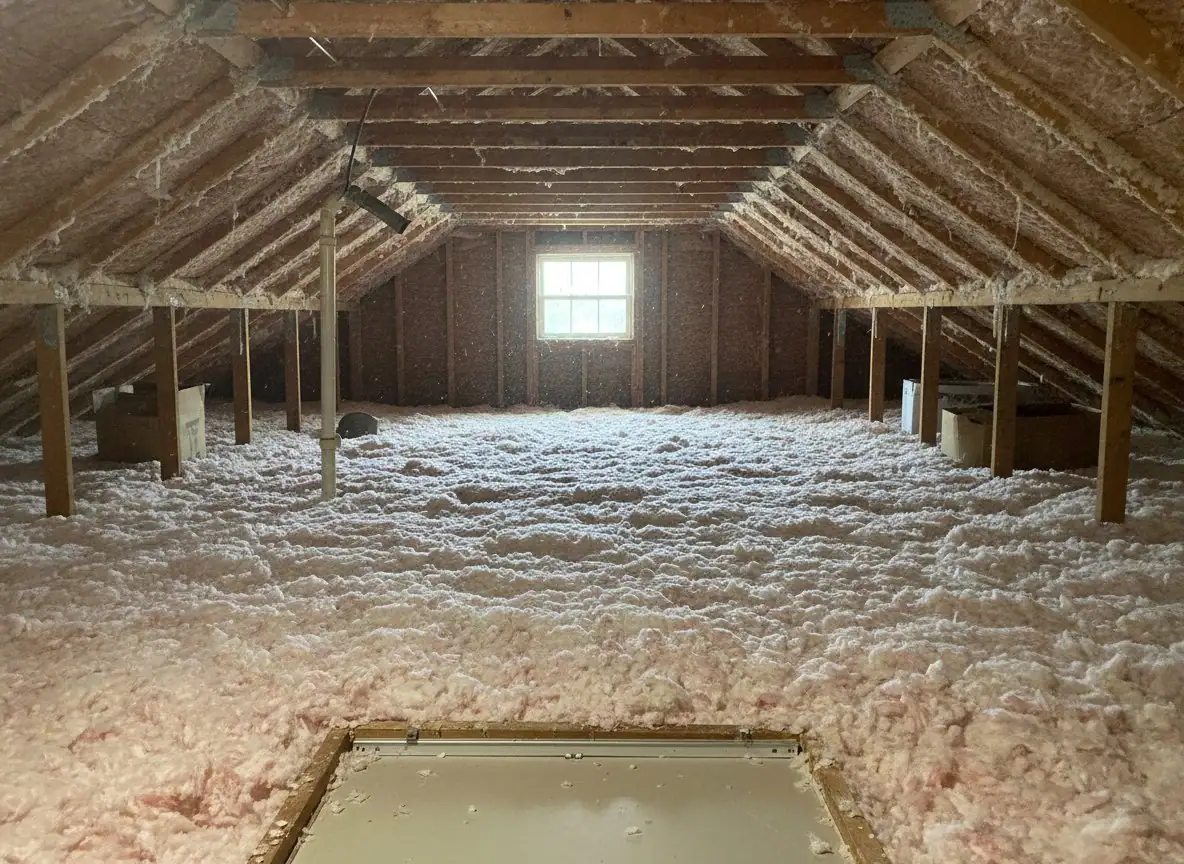
Batt insulation — sometimes called blanket insulation — consists of flexible panels of fibrous material manufactured to standard widths designed to fit between typical framing members spaced 16 or 24 inches on center. The two most common materials used in batt insulation are fiberglass and mineral wool (also called rock wool or slag wool), though cotton batts made from recycled denim are gaining popularity as an eco-friendly alternative.
The concept of batt insulation dates to the early twentieth century, when Owens Corning commercialized fiberglass insulation in the 1930s. By the post-World War II housing boom of the late 1940s and 1950s — the same era that produced many of La Habra’s residential neighborhoods — batt insulation became standard practice in new construction. However, early versions used R-values far below modern energy code requirements, which means millions of homes built during that era, including many in La Habra, are significantly under-insulated by today’s standards.
Read moreShow less
In California, Title 24 energy standards set minimum R-value requirements that vary by climate zone. La Habra falls within Climate Zone 8, which calls for attic insulation of at least R-38, and wall insulation of R-13 or greater in new construction. Many older La Habra homes — particularly those built before 1980 — fall far short of these benchmarks, operating with original batt insulation that has degraded, compressed, or simply never met modern standards.
Batt insulation is used throughout a home in multiple applications. In attics, batts are laid between or over ceiling joists. In exterior walls, batts fill the cavity between interior drywall and exterior sheathing. In crawl spaces and floors above unconditioned areas, batts are installed between floor joists. Each application requires precise fitting to avoid gaps, voids, or compression — all of which reduce effective R-value significantly. In La Habra’s mixed housing stock — which includes 1920s Craftsman bungalows near downtown, 1950s ranch homes in the midtown area, and 1980s tract developments near the Fullerton border — proper technique adapted to each building’s framing era is essential for optimal performance.
Why Batt Insulation Is Needed in La Habra, CA
Climate Extremes at the Foothills
Unlike coastal Orange County cities such as Huntington Beach or Newport Beach, La Habra sits inland at an elevation ranging from approximately 350 to 600 feet above sea level, tucked against the Puente Hills. This position creates a climate characterized by hot, dry summers and mild but variable winters. Summer temperatures in La Habra regularly reach 95°F to 100°F during inland heat events — sometimes exceeding 105°F during severe Santa Ana wind episodes — while coastal communities just 15 miles southwest may remain in the mid-70s. During the exceptional heat dome of September 2022, La Habra recorded temperatures above 100°F for multiple consecutive days, placing extreme demand on air conditioning systems and exposing homes with inadequate insulation to dangerous interior heat gain.
Santa Ana Wind Events and Thermal Cycling
Santa Ana winds are a defining climate feature for La Habra. These dry, hot, downslope winds — which can gust over 60 mph through the Whittier Narrows and the Puente Hills gap — drive rapid temperature spikes that stress building envelopes repeatedly throughout the fall and winter months. Each thermal cycling event causes expansion and contraction in wall and attic assemblies, gradually loosening poorly installed batts and accelerating the degradation of aged fiberglass insulation. Homes in La Habra neighborhoods like Vista Del Valle and the hillside streets east of Harbor Boulevard are particularly exposed to these wind-driven thermal swings.
Aging Housing Stock
According to U.S. Census data, a significant portion of La Habra’s housing was constructed before 1980. Homes built in the 1950s and 1960s — concentrated in the areas around Walnut Street, Cypress Street, and the Lambert Road corridor — were often constructed with 2×4 wall framing containing fiberglass batts rated at R-11 or R-13 at best. Decades of settling, moisture exposure from rare but significant rain events like the atmospheric river storms of January and February 2023 (which brought over 6 inches of rain to the La Habra area), and pest activity in attic spaces have further degraded original insulation performance.
Energy Cost Pressure
Southern California Edison serves La Habra, and residential electricity rates in California consistently rank among the highest in the nation — exceeding $0.30 per kWh during peak summer tiers in recent billing cycles. Homes with sub-standard insulation can lose 25 to 40 percent of their conditioned air through the attic and walls, translating directly to inflated energy bills month after month. Properly installed, code-compliant batt insulation can reduce heating and cooling costs by 15 to 25 percent annually for typical La Habra households.
Wildfire Smoke and Air Quality
La Habra’s proximity to fire-prone hillside areas — including the Puente Hills Preserve less than five miles to the northeast — means that wildfire smoke infiltration is a recurring concern. While batt insulation’s primary role is thermal, a properly insulated and air-sealed building envelope also reduces particulate infiltration during smoke events, improving indoor air quality for La Habra families during active fire seasons.
Free, no-obligation estimates
Talk to Clean Zone Attic Insulation
Tell us what you need and we’ll take it from there.
Signs You Need Batt Insulation in La Habra
Energy and Comfort Indicators
- Monthly electricity bills that spike above $250–$350 during La Habra’s summer heat waves despite normal thermostat settings
- Rooms that never reach a comfortable temperature, particularly second-floor bedrooms that overheat in July and August
- HVAC system running continuously without maintaining the set temperature
- Noticeable drafts along interior walls during Santa Ana wind events
Visual and Physical Symptoms
- Visible fiberglass batt insulation in the attic that appears flattened, yellowed, or compacted to less than half its original thickness
- Dark staining or discoloration at the edges of batts, indicating air bypassing through the insulation
- Missing batt sections in wall cavities discovered during renovation work
- Condensation or moisture staining on interior wall surfaces during winter months
Urgency Indicators
- Evidence of rodent nesting in attic batts — a common issue in La Habra homes near the Puente Hills wildlife corridor
- Mold or mildew odor in attic spaces following wet winter seasons
- Home was built before 1980 and insulation has never been inspected or upgraded
- Recent insulation removal that has not yet been replaced
Our process
Our Batt Insulation Installation Process in La Habra
- 01
Free On-Site Inspection (1–2 Hours)
Our certified technician visits your La Habra home to assess existing insulation levels, identify gaps and air leakage points, check for pest damage or moisture issues, and measure all insulation zones. We use a thermal imaging camera to locate hidden voids th
- 02
Detailed Written Estimate (Within 24 Hours)
We provide a clear, itemized written estimate covering materials, labor, and any preparatory work such as insulation removal or air sealing. We specify the R-value target for each zone, ensuring compliance with California Title 24 Climate Zone 8 requirements f
- 03
Preparatory Air Sealing (2–4 Hours)
Before any batt insulation is installed, we seal all bypasses — penetrations around pipes, wires, recessed lights, and top plates — with spray foam or caulk. This step is critical in La Habra’s older homes, where decades of settling have opened gaps that bypas
- 04
Old Insulation Removal (If Required) (Half to Full Day)
For homes where existing insulation is pest-damaged, moisture-compromised, or below remediation thresholds, we perform complete removal using commercial vacuum equipment before installing fresh batt insulation. Learn more about our insulation removal service
- 05
Batt Installation (Half to Full Day)
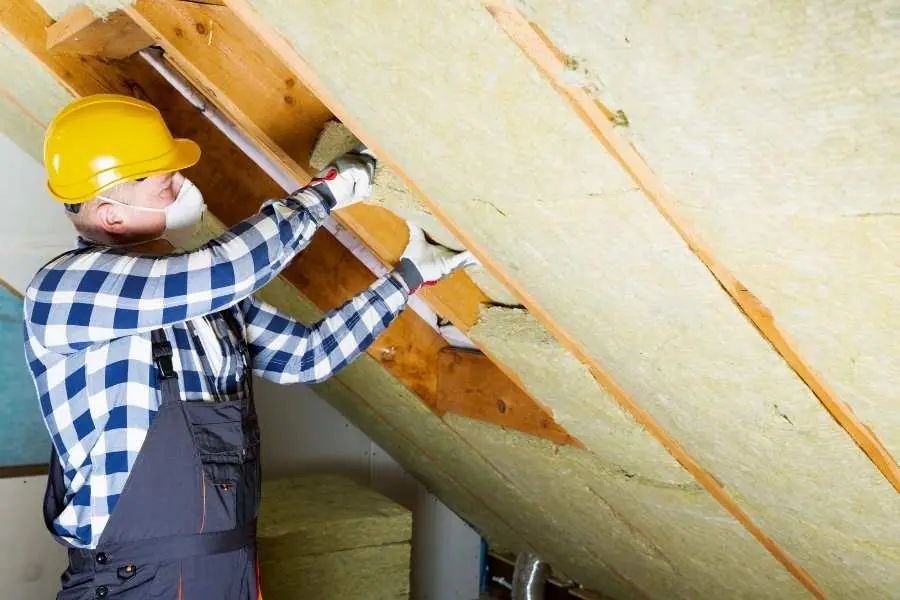
Our technicians install batt insulation with precision — cutting each panel to fit without compression, ensuring full contact with framing edges, and installing batts vapor-retarder-side correctly for La Habra’s Climate Zone 8 mixed-humid conditions. In attic
- 06
Final Inspection and Documentation (30–60 Minutes)
We perform a post-installation inspection, photograph completed work zones, and provide you with documentation of installed R-values and materials — records that support utility rebate applications with Southern California Edison and add verifiable value when
Batt Insulation Methods and Approaches We Use in La Habra
Standard Fiberglass Batts
The most widely available and cost-effective option, fiberglass batts are ideal for La Habra attics and walls where moisture levels are controlled and budgets are a primary concern. We use faced batts (with kraft paper or foil vapor retarder) in wall cavities and unfaced batts in attic applications where ventilation manages moisture.
Mineral Wool (Rockwool) Batts
Mineral wool batts offer superior fire resistance (rated to over 1,200°F), better sound attenuation, and improved moisture resistance compared to fiberglass. For La Habra homes near the Puente Hills fire interface zones, mineral wool batts provide an added layer of fire resilience that fiberglass cannot match. They are also preferred for walls shared between attached garages and living spaces.
High-Density Fiberglass Batts
High-density or “cathedral ceiling” batts provide R-15 performance within a standard 2×4 wall cavity — useful for La Habra’s pre-1990 homes where wall framing cannot be replaced but maximum thermal performance is desired without adding exterior rigid foam.
Hybrid Batt and Blown-In Systems
For La Habra attics with irregular joist spacing or obstructions from older framing, we may combine batt insulation in accessible areas with blown-in insulation to achieve uniform coverage across the entire attic floor. This hybrid approach is particularly effective in 1950s ranch homes common along Cypress Street and Walnut Street.
Batt Insulation for Crawl Spaces
In La Habra homes with raised foundations — common in the older Craftsman neighborhoods near downtown — batts are installed between floor joists to insulate floors above crawl spaces. This is often paired with crawl space encapsulation for comprehensive moisture and thermal control.
Batt Insulation Cost in La Habra, CA
Understanding the investment involved in batt insulation helps La Habra homeowners plan effectively and evaluate proposals accurately.
Typical Price Ranges
- Attic batt insulation (installation only, existing insulation intact): $1.50–$2.50 per square foot
- Attic batt insulation with old insulation removal: $2.50–$4.00 per square foot
- Wall batt insulation (new construction or open-wall renovation): $1.00–$2.00 per square foot of wall area
- Crawl space floor batt insulation: $2.00–$3.50 per square foot
- Average whole-home batt insulation project in La Habra: $2,500–$7,500 depending on home size and scope
Factors Affecting Cost in La Habra
- Home size and attic access: La Habra’s hillside homes east of Euclid Street often have complex rooflines that require additional labor time.
- Existing insulation condition: Pest-damaged or moisture-compromised insulation requiring removal adds $0.75–$1.50 per square foot in removal costs.
- Material choice: Mineral wool batts cost approximately 20–30% more than comparable fiberglass products but offer superior performance benefits.
- Air sealing scope: Homes with numerous bypasses — common in La Habra’s pre-1980 housing stock — may require $300–$800 in additional air sealing labor.
Read moreShow less
Available Rebates
Southern California Edison offers rebates through the California Energy Commission’s Energy Upgrade California program for qualifying insulation upgrades. La Habra homeowners may be eligible for rebates of $0.10–$0.20 per square foot of qualifying attic insulation installed to R-38 or above. Ask our team about current rebate availability when you call (562) 526-0372.
La Habra Neighborhoods We Serve
Downtown La Habra and Historic Core
The blocks surrounding La Habra Boulevard and the historic downtown corridor contain some of the city’s oldest housing — Craftsman bungalows and early California-style homes built between the 1910s and 1940s. These homes typically have balloon-frame or platform-frame construction with little to no original wall insulation and attics accessed through small, low-clearance hatches. Our team has extensive experience adapting batt installation techniques to these compact, character-rich structures.
Midtown La Habra — Lambert Road and Cypress Street Corridors
Post-war tract homes built through the 1950s and 1960s dominate this central La Habra zone. Standard 2×4 wall framing and shallow attics with original R-11 or R-13 fiberglass batts — often 60-plus years old — are the norm. Upgrading to R-38 attic insulation in these homes delivers the most significant energy savings relative to cost.
North La Habra — Near the Fullerton and La Habra Heights Borders
Homes built in the 1970s through 1990s in northern La Habra closer to the La Habra Heights and Fullerton city limits tend to have slightly larger footprints and more attic access. However, their proximity to hillside terrain means greater exposure to Santa Ana wind pressure differentials and occasional intrusion of wildlife — both factors that accelerate insulation degradation and make periodic inspection essential.
Batt Insulation Maintenance Tips for La Habra Homeowners
- Inspect attic insulation annually — ideally each fall before Santa Ana wind season begins in October, looking for compressed, displaced, or moisture-stained batts.
- Check attic ventilation — La Habra’s warm climate requires adequate soffit and ridge ventilation to prevent heat and moisture buildup that degrades fiberglass batts over time.
- Seal attic access hatches — an uninsulated or poorly gasketed attic hatch can bypass R-38 of attic insulation; install a pre-fabricated insulated cover or add batt material to the hatch panel.
- Monitor for pest entry points — La Habra’s proximity to the Puente Hills wildlife corridor makes squirrel, rat, and opossum intrusion into attic spaces a realistic risk; seal all eave gaps and roof penetrations promptly.
- After major rain events — following atmospheric river storms like those of January 2023, inspect attic spaces for moisture infiltration through roof penetrations that could have wetted batt insulation.
- Avoid compressing batts — never stack storage items directly on top of attic batt insulation; compression reduces R-value immediately and permanently.
- Schedule a professional re-inspection every 10 years — insulation performance degrades gradually, and a thermal imaging inspection every decade helps catch problems before they become costly.
Why Choose Clean Zone Attic Insulation for Batt Insulation in La Habra
At Clean Zone Attic Insulation, we have built our reputation on detailed, location-specific workmanship that generic national contractors cannot match. We understand the specific challenges La Habra homeowners face — from the thermal stress of inland heat events and Santa Ana winds to the aging housing stock concentrated around downtown and the Lambert Road corridor.
Our service area covers La Habra and surrounding communities throughout Orange and Los Angeles Counties, giving our technicians direct familiarity with the building eras, framing styles, and climate conditions that define each neighborhood. We don’t apply a one-size-fits-all approach; every project begins with a thorough inspection and ends with documented R-value verification.
Read moreShow less
Beyond batt insulation, we offer a comprehensive range of insulation solutions — including spray foam insulation, blown-in insulation, attic insulation, crawl space insulation, and insulation removal — allowing us to recommend and implement the right solution for your specific property. Call us at (562) 526-0372 to schedule your free inspection.
FAQ
Frequently Asked Questions About Batt Insulation in La Habra, CA
How much does batt insulation cost in La Habra?
In La Habra, batt insulation typically costs between $1.50 and $4.00 per square foot installed, depending on the zone being insulated, whether old insulation removal is needed, and the material chosen. A full attic insulation upgrade for a typical 1,500–2,000 square foot La Habra home commonly ranges from $2,500 to $5,000. Wall insulation in the context of a renovation project is generally less per square foot but depends heavily on wall cavity access.
How long does batt insulation installation take in La Habra?
For most La Habra homes, attic batt insulation installation takes one to two days including air sealing preparation. Larger homes with complex attic geometry — such as hillside properties east of Harbor Boulevard — or homes requiring old insulation removal first may require two to three days total.
What R-value do I need for my La Habra home?
La Habra is located in California Title 24 Climate Zone 8. Current code requires a minimum of R-38 in attics for new construction and major renovations. For maximum energy savings given La Habra’s summer heat exposure, we recommend R-49 in attics. Exterior walls in 2×4 framing should achieve R-13 to R-15; 2×6 framing allows R-19 to R-21.
Can batt insulation be installed in La Habra homes without removing old insulation?
In many cases, yes — unfaced fiberglass batts can be laid over existing insulation in attics to bring older La Habra homes up to current R-value standards. However, if the existing insulation shows signs of pest damage, mold, or moisture saturation (common in La Habra homes that experienced roof leaks during the significant rainfall events of early 2023), removal and replacement is the correct approach before adding new material.
Is batt insulation or blown-in insulation better for La Habra attics?
Both are effective in La Habra attics. Batt insulation allows for easier visual inspection and is ideal when attic access is good and joist spacing is uniform. Blown-in insulation provides superior coverage in attics with irregular framing, many obstructions, or limited access — common in older La Habra Craftsman homes near downtown. Our technicians can recommend the optimal approach after a free on-site inspection. Learn more about blown-in insulation options.
Does Clean Zone Attic Insulation serve areas near La Habra?
Yes — in addition to La Habra, we serve Brea, Fullerton, Placentia, Yorba Linda, Buena Park, La Habra Heights, Whittier, La Mirada, Rowland Heights, Hacienda Heights, West Covina, Norwalk, Santa Fe Springs, Downey, Cerritos, Anaheim, Garden Grove, and La Puente.
Will new batt insulation help with noise reduction in my La Habra home?
Yes, particularly if you choose mineral wool batts, which offer a Sound Transmission Class (STC) rating significantly higher than fiberglass. For La Habra homes near busy corridors like Whittier Boulevard, Imperial Highway, or Harbor Boulevard, mineral wool batts in interior and exterior walls provide meaningful sound attenuation alongside their thermal benefits.
Are there rebates available for batt insulation in La Habra?
La Habra homeowners served by Southern California Edison may qualify for insulation rebates through state and utility-sponsored programs. Rebate amounts and eligibility criteria change periodically; our team stays current on available incentives and can advise you during your free inspection and estimate.
Get Your Free Batt Insulation Estimate in La Habra Today
Don’t let inadequate insulation drive up your energy bills through another La Habra summer or expose your family to winter drafts and unhealthy air infiltration. Clean Zone Attic Insulation is ready to provide a thorough, no-obligation inspection and detailed written estimate for your La Habra home or commercial property.
Whether you are in the historic downtown area, along the Lambert Road corridor, or in a hillside neighborhood near La Habra Heights, our team has the local expertise and professional equipment to deliver a batt insulation installation that meets California Title 24 standards and your personal comfort goals.
Call us now at (562) 526-0372 to schedule your free on-site inspection. We serve La Habra and all surrounding communities throughout Orange and Los Angeles Counties.
Get in touch
Find insulation help near you
Request a free estimate online or give us a call — our team will follow up quickly.
- Call us(562) 526-0372
- Visit731 N Beach Blvd, La Habra, CA 90631
- HoursMon-Sun 07:00-19:00