Rockwool Insulation in La Habra, CA
Energy-Saving Rockwool Insulation for La Habra, CA Homes — Licensed & Insured
Get expert Rockwool insulation in La Habra, CA. Clean Zone Attic Insulation offers fire-resistant, energy-efficient installs. Call (562) 526-0372 for a free estimate.
Rockwool insulation — also known as mineral wool or stone wool insulation — is a premium, fire-resistant insulation material engineered from volcanic basalt rock and recycled slag. At Clean Zone Attic Insulation, we specialize in professional Rockwool insulation installation for homes and businesses throughout La Habra, California, and the surrounding communities of North Orange County and Southeast Los Angeles County.
La Habra’s unique position along the Puente Hills corridor means residents contend with significant temperature swings, wildfire smoke infiltration from nearby canyons, and aging housing stock that was never designed to meet modern energy-efficiency standards. Rockwool addresses all of these challenges simultaneously — delivering exceptional thermal performance, outstanding sound dampening, and industry-leading fire resistance in a single product.
Read moreShow less
Whether you’re upgrading an older 1950s ranch home near Harbor Boulevard or insulating a newer build in La Habra Heights-adjacent neighborhoods, our team brings localized expertise, precision installation, and a commitment to lasting results. Call us today at (562) 526-0372 to schedule your free assessment.
Understanding Rockwool Insulation
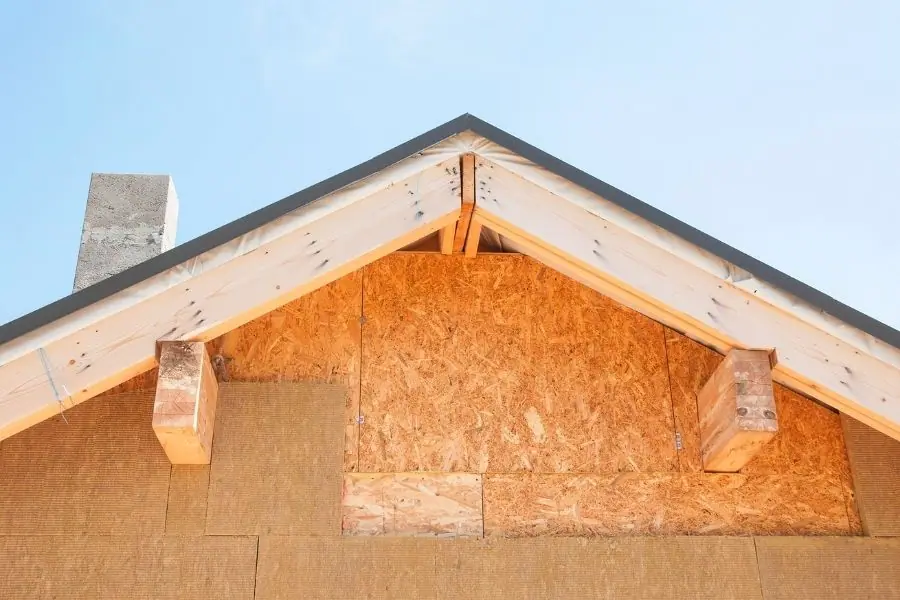
Rockwool insulation is manufactured by melting volcanic basalt rock and industrial slag at temperatures exceeding 2,900°F, then spinning the molten material into fine, interlocking fibers. The resulting product is dense, dimensionally stable, and inherently resistant to fire, moisture, pests, and sound transmission. Unlike fiberglass batts — which compress easily and lose R-value when disturbed — Rockwool batts maintain their shape, their insulating capacity, and their structural integrity over decades of use.
The material was first developed in Europe during the early twentieth century, where it gained rapid adoption in Scandinavian and German construction markets due to its exceptional performance in cold climates. By the 1980s and 1990s, North American building scientists began recognizing Rockwool’s versatility in mixed climates — particularly in regions like Southern California, where homes must manage both summer cooling loads exceeding 95°F and winter heating demands that dip below 45°F overnight.
Read moreShow less
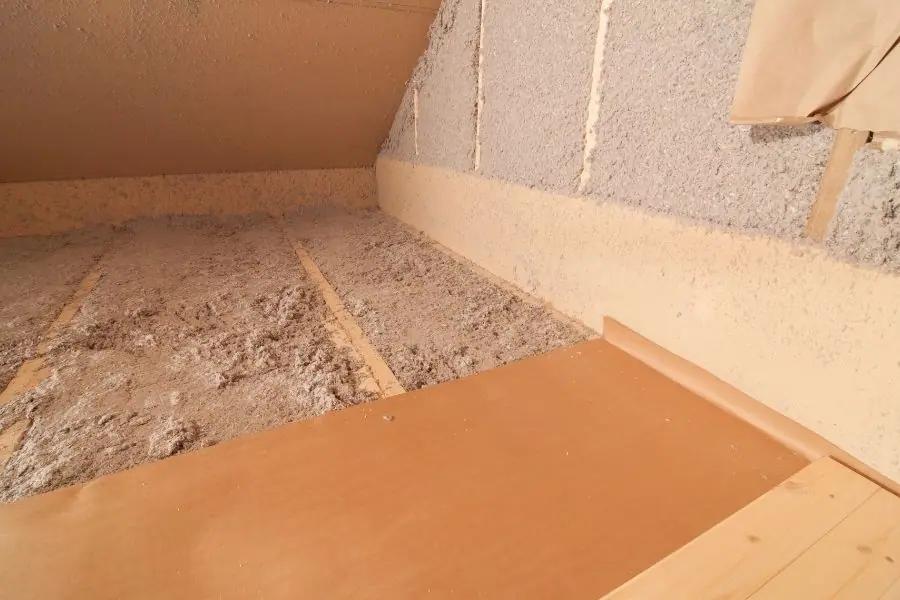
Rockwool is sold in several forms relevant to residential and light-commercial construction in La Habra. Batt insulation fits between standard wall studs and attic joists. Rigid board insulation provides continuous thermal barriers for exterior applications. Loose-fill mineral wool can be blown into existing cavities, making it ideal for the retrofitting of La Habra’s abundant mid-century housing stock without requiring invasive demolition.
One of Rockwool’s most important characteristics for California residents is its fire performance. Rockwool batts are non-combustible and can withstand temperatures up to 1,800°F, earning it Class A fire ratings under ASTM E84 testing. In a region where the California Department of Forestry and Fire Protection (CAL FIRE) classifies communities near the Puente Hills and Whittier Hills as High Fire Hazard Severity Zones, this distinction is not merely a selling point — it is a genuine life-safety advantage.
Rockwool also carries an R-value of approximately R-3.0 to R-3.3 per inch, slightly outperforming standard fiberglass batts in real-world conditions. Its open-fiber structure allows water vapor to pass through without absorbing liquid moisture, dramatically reducing the risk of mold growth — a persistent concern in La Habra’s older crawl spaces and poorly ventilated attics.
Why Rockwool Insulation Is Needed in La Habra, CA
Extreme Seasonal Temperature Swings
La Habra’s climate data from NOAA’s Fullerton Municipal Airport station — the closest official monitoring point — shows average July highs of 91°F and average January lows of 44°F. However, during Santa Ana wind events, which typically occur between October and February, interior temperatures can spike 10°F to 15°F above the seasonal norm within a matter of hours. In 2021, a late-October Santa Ana event pushed La Habra temperatures to 97°F while simultaneously dropping relative humidity below 8 percent, creating extreme thermal stress on homes with inadequate insulation. Rockwool’s dimensional stability means it doesn’t shift or settle during these rapid thermal cycles the way blown fiberglass can.
Wildfire Smoke and Air Quality
La Habra sits downwind of the Puente Hills and the Chino Hills State Park, both of which have experienced significant fire activity. The Brea Fire of 2008 burned within 5 miles of central La Habra, and the periodic wildfire seasons since 2017 have brought Air Quality Index (AQI) readings into the “Very Unhealthy” range exceeding 200 on multiple occasions. Gaps in attic and wall insulation allow smoke-laden outside air to infiltrate living spaces. Rockwool’s dense fiber matrix acts as a mechanical filter layer at the building envelope, reducing particulate infiltration compared to poorly insulated structures.
Aging Housing Stock and Energy Inefficiency
A significant portion of La Habra’s residential neighborhoods — particularly those east of Beach Boulevard and south of Lambert Road — were constructed between 1945 and 1975. Many of these homes were built under building codes that required little to no wall insulation and only minimal attic coverage. The La Habra Orchards neighborhood and the Olita Street district both contain concentrations of these mid-century homes, where energy bills routinely run 30–45 percent higher than comparable newer construction. Utility data from Southern California Edison’s Residential Energy Reports for ZIP codes 90631 and 90633 consistently show La Habra households averaging 8,200 to 9,400 kWh annually — well above the statewide residential average of approximately 6,500 kWh.
Puente Hills Soil and Moisture Dynamics
La Habra’s proximity to the Puente Hills introduces expansive clay soils classified by the USDA as Whittier and Sorrento clay loam series. These soils retain subsurface moisture seasonally, which wicks upward through concrete slab foundations and into crawl spaces. Without proper insulation and vapor management — including Rockwool in crawl space walls and floor joists — this ground moisture accelerates wood degradation, mold proliferation, and thermal bridging through uninsulated framing.
Sound Pollution Along Major Corridors
Homes within 1,000 feet of Imperial Highway (SR-90), Harbor Boulevard, or Beach Boulevard experience noise levels regularly measured between 65 and 75 decibels during peak traffic hours. Rockwool’s Sound Transmission Class (STC) rating of 45–52 when installed in standard wall assemblies makes it the most effective batt insulation solution for acoustical comfort in these high-traffic zones.
Free, no-obligation estimates
Talk to Clean Zone Attic Insulation
Tell us what you need and we’ll take it from there.
Signs You Need Rockwool Insulation in La Habra
Energy and Comfort Indicators
- Monthly Southern California Edison bills exceeding $180–$220 during summer months in a standard 1,500–2,000 sq. ft. home
- Rooms near the attic or exterior walls that feel 8°F or more warmer than the thermostat setting
- HVAC system running continuously for more than 20 minutes per cycle during mild 80°F weather
- Visible daylight or drafts around attic hatch covers, recessed lighting, or wall outlets
Structural and Material Warning Signs
- Existing fiberglass batts that appear flattened, compressed below 3.5 inches, or discolored brown or gray
- Attic insulation depth measuring less than 10 inches, which corresponds to below R-30 — insufficient for California Title 24 compliance in La Habra’s Climate Zone 8
- Presence of vermiculite, damaged fiberglass, or deteriorating kraft paper vapor barriers in pre-1980 homes
- Water stains or rust streaks on attic joists indicating condensation events
Acoustic and Air Quality Concerns
- Clearly audible traffic noise from Imperial Highway or Lambert Road inside closed rooms
- Persistent musty odors after rainfall, particularly in rooms above crawl spaces
- Elevated indoor dust or allergy symptoms during Santa Ana wind events
If you recognize two or more of these symptoms, contact Clean Zone Attic Insulation at (562) 526-0372 for a professional evaluation before the next cooling season.
Our process
Our Rockwool Insulation Installation Process in La Habra
- 01
Free On-Site Assessment (1–2 Hours)
Our technician visits your La Habra property, inspects the attic, walls, crawl space, and garage ceiling, and documents existing insulation R-values, air sealing deficiencies, and moisture indicators. We use a calibrated thermal imaging camera to identify hidd
- 02
Insulation Removal if Required (2–4 Hours)
Homes with damaged, contaminated, or sub-standard existing insulation undergo professional removal using HEPA-filtered vacuum equipment. Learn more about our insulation removal service before new Rockwool installation begins. All removed material is double-bag
- 03
Air Sealing (1–3 Hours)
Prior to Rockwool installation, we seal all attic bypasses — including top plates, recessed lighting housings, HVAC penetrations, and chimney chases — using fire-rated caulk and spray foam. In La Habra’s older Craftsman and ranch-style homes, this step alone c
- 04
Rockwool Batt or Board Installation (3–6 Hours)
Rockwool batts are cut to precise dimensions using a utility knife and installed friction-fit between joists and studs. No staples or fasteners are required. For wall cavities in occupied homes, we use minimally invasive drill-and-fill methods where applicable
- 05
Quality Verification and Thermal Scan (30–60 Minutes)
After installation, we conduct a second thermal imaging pass and physically verify coverage depths at multiple measurement points. We provide written documentation of achieved R-values for permit records and utility rebate applications.
- 06
Cleanup and Debris Removal (30–45 Minutes)
All packaging, off-cuts, and debris are removed from the property. Attic access areas are cleaned and restored to their pre-work condition.
- 07
Final Walkthrough and Documentation
We walk through the project with you, explain what was installed, provide maintenance guidance, and issue a completion report for your records.
Rockwool Insulation Methods and Approaches
Rockwool Batt Insulation
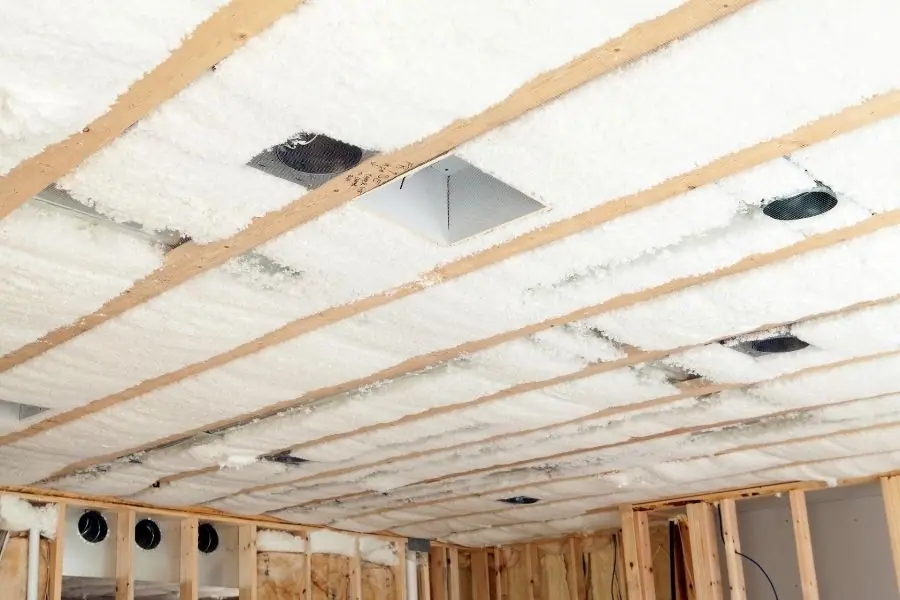
Standard Rockwool batts are the most common installation method for open attic floors, wall cavities during renovation, and floor joist bays above crawl spaces. In La Habra’s post-war tract homes with standard 16-inch and 24-inch on-center framing, batts install cleanly without cutting waste. This method is ideal when attic access is straightforward and framing is in good condition.
Rockwool Rigid Board Insulation
ComfortBoard IS and similar rigid Rockwool panels provide continuous exterior insulation on garage walls, below roof decking, or as thermal breaks beneath new siding during exterior remodels. This approach eliminates thermal bridging through wood studs — a significant energy loss pathway in La Habra’s older wood-framed construction.
Combined Rockwool and Spray Foam Systems
For maximum performance in attic knee walls, cathedral ceilings, or unvented attic assemblies, we combine closed-cell spray foam at the roof deck (2–3 inches for vapor control) with Rockwool batts filling the remaining rafter cavity. Learn more about our spray foam insulation services for complex attic configurations. This hybrid system achieves R-38 to R-49 in a single rafter bay.
Rockwool Blow-In for Retrofit Walls
Using specialized blowing equipment, loose-fill mineral wool can be dense-packed into existing closed wall cavities through small access holes. This is particularly valuable in La Habra’s 1950s and 1960s stucco-clad homes where opening walls is prohibitively expensive. Explore our blow-in insulation options for retrofit applications.
Rockwool in Crawl Space Applications
Rockwool’s moisture resistance makes it the preferred choice for floor joist insulation in vented crawl spaces. Combined with a 6-mil or 20-mil polyethylene vapor barrier on the crawl space floor, Rockwool floor insulation significantly reduces ground moisture migration in La Habra’s clay-rich soil zones. See our crawl space insulation services for full crawl space solutions.
Rockwool Insulation Cost in La Habra, CA
Understanding the investment involved helps La Habra homeowners plan their insulation projects effectively. Rockwool insulation costs more upfront than standard fiberglass batts — typically 20–30 percent more per square foot — but delivers a faster energy payback period due to its superior installed performance and durability.
Typical Price Ranges for La Habra Projects
- Attic insulation (Rockwool batts to R-49, 1,000–1,500 sq. ft.): $1,800–$3,200 installed
- Wall insulation retrofit (blow-in mineral wool, average 3-bed home): $2,500–$4,500 installed
- Crawl space floor insulation (Rockwool batts, 800–1,200 sq. ft.): $1,400–$2,600 installed
- Garage ceiling insulation (Rockwool batts to R-19): $600–$1,200 installed
- Combined attic insulation removal and Rockwool replacement: $2,800–$5,500 depending on existing material type and contamination level
Read moreShow less
Factors That Affect Cost in La Habra
- Attic accessibility — low-slope rooflines common in La Habra’s ranch-style homes add 10–15 percent to labor costs
- Presence of existing insulation requiring removal and disposal
- Extent of air sealing work needed in pre-1975 construction
- Square footage and number of distinct insulation zones
Available Incentives
Southern California Edison’s Energy Savings Assistance Program and the federal Inflation Reduction Act’s 25C tax credit (covering 30 percent of insulation material costs up to $1,200 annually) can meaningfully offset project costs. Our team can provide documentation to support your rebate applications. Call (562) 526-0372 for a detailed written estimate.
La Habra Neighborhoods We Serve
La Habra Orchards District
This historic area east of Euclid Street contains some of La Habra’s oldest residential properties, many built between 1935 and 1960 on large lots. These homes frequently have uninsulated balloon-frame walls and attics with only 2–3 inches of deteriorated fiberglass — well below modern standards. Rockwool retrofit insulation is particularly effective here due to the irregular framing dimensions common in this era.
Harbor Boulevard Corridor Neighborhoods
Homes within several blocks of Harbor Boulevard in central La Habra face dual challenges: elevated traffic noise from this major arterial road and thermal gain from dense urban heat island effects. Rockwool’s combined thermal and acoustic performance makes it the ideal solution for these properties, typically built between 1955 and 1975.
Lambert Road and Idaho Street Areas
This mid-city residential zone features a mix of 1960s tract homes and 1980s infill construction. Homes here frequently have partial attic insulation from previous owners’ DIY efforts — a patchwork of fiberglass batts and loose-fill cellulose that leaves significant coverage gaps. We provide comprehensive insulation assessment and uniform Rockwool installation to eliminate these thermal bypasses.
South La Habra Near Imperial Highway
Properties near the La Habra–Brea boundary along Imperial Highway (SR-90) include both residential and mixed-use buildings. Sound transmission from highway traffic is a primary concern here, and Rockwool’s STC performance consistently outperforms fiberglass alternatives in these applications. Explore our full attic insulation services for this region.
Rockwool Insulation Maintenance Tips for La Habra Homeowners
- Annual attic inspection: Every fall before Santa Ana wind season, visually inspect your attic insulation for signs of displacement, pest intrusion, or water damage from roof leaks.
- Monitor for pest entry: La Habra’s warmer climate creates year-round rodent pressure. Inspect attic eave vents and gable vents annually for signs of chewing or nesting, which can displace Rockwool batts.
- Check attic ventilation: Ensure soffit and ridge vents remain unobstructed. Blocked ventilation creates moisture buildup that can affect any insulation material, including Rockwool.
- Measure insulation depth after any attic work: HVAC servicing, duct repairs, or holiday storage activity can compress or displace batts. Use a ruler to verify R-value depth hasn’t decreased.
- Inspect crawl space vapor barrier annually: Check that ground cover remains intact and properly lapped, particularly after wet winters when La Habra averages 14–16 inches of seasonal rainfall.
- Air seal new penetrations: Any new HVAC, plumbing, or electrical penetrations through insulated assemblies must be re-sealed promptly to maintain the building envelope.
- Schedule a professional re-assessment every 10 years: Even high-quality Rockwool installations benefit from professional review as building codes, energy rates, and occupancy needs evolve over time.
Why Choose Clean Zone Attic Insulation for Rockwool in La Habra
Clean Zone Attic Insulation has built its reputation serving homeowners across La Habra and the surrounding North Orange County and Southeast Los Angeles County communities. We understand that La Habra’s housing stock is diverse — ranging from 1930s Craftsman bungalows near the old citrus orchards to 1990s stucco colonials near the Brea border — and we tailor every Rockwool installation to the specific construction type, climate exposure, and performance goals of each property.
Our technicians are trained specifically on Rockwool installation best practices, including the critical air sealing steps that determine whether premium insulation materials deliver their full performance potential. We don’t take shortcuts on sealing attic bypasses or verifying coverage depths, because we know that an improperly installed R-49 batt system can underperform a properly installed R-38 system.
Read moreShow less
We serve all of La Habra’s ZIP codes — 90631 and 90633 — as well as neighboring communities including Brea, Fullerton, Placentia, and La Habra Heights. View our full range of insulation services, or call us directly at (562) 526-0372 to speak with a local specialist who knows your neighborhood’s insulation challenges firsthand.
FAQ
Frequently Asked Questions About Rockwool Insulation in La Habra, CA
How much does Rockwool insulation cost in La Habra?
For a typical La Habra home, Rockwool attic insulation installation runs between $1,800 and $3,200 for 1,000–1,500 square feet installed to R-49. Wall retrofit and crawl space applications vary based on accessibility and existing conditions. Federal tax credits under the Inflation Reduction Act’s 25C provision can offset 30 percent of material costs, and Southern California Edison rebates may apply depending on current program availability.
Is Rockwool better than fiberglass for La Habra homes?
For most La Habra applications, yes. Rockwool outperforms fiberglass in fire resistance — critical given La Habra’s proximity to High Fire Hazard Severity Zones near the Puente Hills — and it maintains its R-value far better over time. Rockwool also resists moisture absorption, making it preferable for crawl spaces above La Habra’s clay-rich soils, and it provides significantly better sound attenuation for homes near Harbor Boulevard or Imperial Highway.
How long does Rockwool insulation last?
Rockwool insulation is rated to last the lifetime of the building when properly installed — typically 50 to 80 years or more. Unlike fiberglass, it does not degrade from moisture exposure or settle significantly over time. A 1960s La Habra home re-insulated with Rockwool today should not require insulation replacement for decades under normal conditions.
How long does Rockwool installation take in a typical La Habra home?
A standard attic insulation project in a 1,200–1,800 square foot La Habra ranch home — including removal of old insulation, air sealing, and Rockwool batt installation — is typically completed in a single day (6–8 hours). Larger projects or those requiring wall cavity work may extend to two days. We schedule around your availability and minimize disruption to your household.
Does Rockwool insulation help with La Habra’s wildfire smoke infiltration?
Yes, meaningfully so. While no insulation product eliminates smoke infiltration entirely, properly installed Rockwool — combined with thorough air sealing at attic penetrations — significantly reduces the volume of outdoor air entering the home through the building envelope. During the elevated-AQI smoke events that affect La Habra during Southern California fire seasons, this reduction in infiltration can meaningfully improve indoor air quality.
Can I qualify for utility rebates for Rockwool insulation in La Habra?
La Habra is served by Southern California Edison, which periodically offers rebates through its Energy Savings Assistance and Residential Energy Efficiency programs. Eligibility depends on current program funding and income qualifications. Additionally, the federal 25C tax credit covers 30 percent of qualified insulation material costs up to $1,200 annually. We provide all necessary documentation to support your applications.
Does Rockwool insulation require any special permits in La Habra?
The City of La Habra Building and Safety Division generally requires a building permit for insulation projects that change the thermal envelope of a structure, including full attic insulation replacement. Our team handles permit documentation as part of our service and ensures all work meets or exceeds California Title 24 Energy Code requirements for Climate Zone 8, which covers La Habra.
What areas near La Habra do you serve?
In addition to La Habra, Clean Zone Attic Insulation serves Brea, Fullerton, Placentia, Yorba Linda, Buena Park, Anaheim, Garden Grove, La Habra Heights, Whittier, La Mirada, Norwalk, Cerritos, Downey, Santa Fe Springs, West Covina, La Puente, Hacienda Heights, and Rowland Heights. View our complete service area coverage for details.
Get Your Free Rockwool Insulation Estimate in La Habra Today
Don’t let another Southern California summer drain your energy budget or another Santa Ana wind event force wildfire smoke into your home. Clean Zone Attic Insulation is ready to evaluate your La Habra property, identify your insulation deficiencies, and deliver a professional Rockwool insulation installation that will improve your comfort, your indoor air quality, and your monthly utility costs for decades to come.
We serve all La Habra neighborhoods — from the historic Orchards District to the Lambert Road corridor — and we bring the same precision and accountability to every project regardless of size.
Call us now at (562) 526-0372 to schedule your free on-site assessment. Our team is available to answer your questions, discuss financing options, and help you take advantage of available federal and utility rebate programs. Request your free estimate online and we’ll follow up within one business day.
Get in touch
Find insulation help near you
Request a free estimate online or give us a call — our team will follow up quickly.
- Call us(562) 526-0372
- Visit731 N Beach Blvd, La Habra, CA 90631
- HoursMon-Sun 07:00-19:00