Ceiling Insulation in La Habra, CA
Energy-Saving Ceiling Insulation for La Habra, CA Homes — Licensed & Insured
Need ceiling insulation in La Habra, CA? Clean Zone Attic Insulation offers blown-in, spray foam & more. Free estimates. Call (562) 526-0372 today!
Ceiling insulation is the thermal and acoustic barrier installed between your living space and the attic above, designed to regulate indoor temperatures, reduce energy loss, and lower monthly utility costs. In La Habra, CA, where summer temperatures routinely climb past 95°F in the inland valleys and winter nights dip into the low 40s, a properly insulated ceiling is not a luxury — it is a necessity for year-round comfort and energy efficiency.
La Habra’s unique position along the foothills of the Puente Hills, combined with its mix of mid-century ranch homes and newer construction, creates highly variable insulation needs from neighborhood to neighborhood. At Clean Zone Attic Insulation, our team brings deep local knowledge of La Habra’s building stock, climate patterns, and municipal requirements to every project. Whether you are upgrading an aging home in the Portola Hills area or insulating a newly constructed property near Lambert Road, we deliver solutions tailored specifically to your home and your budget. Call us today at (562) 526-0372 for a free assessment.
Understanding Ceiling Insulation
Ceiling insulation refers to any thermally resistant material installed in the overhead plane of a building — typically at the attic floor level or directly against the roof deck — to slow the transfer of heat between the conditioned living space and the unconditioned attic cavity. The science behind ceiling insulation is straightforward: heat naturally moves from warmer areas to cooler ones, and during La Habra’s long, hot summers, that means relentless heat gain pushing down into your home from an attic that can reach 150°F or more.
The effectiveness of any insulation material is measured in R-value, a number representing resistance to heat flow. The higher the R-value, the better the insulation performs. The U.S. Department of Energy recommends homes in California’s Climate Zone 9 — which includes La Habra — maintain ceiling insulation at R-38 to R-60. Many older La Habra homes built before the 1980s still contain original fiberglass batts rated at R-11 or R-19, far below modern standards.
Read moreShow less
Insulation materials have evolved significantly over the decades. Early homes in La Habra built during the post-World War II housing boom of the late 1940s and 1950s used basic rock wool or fiberglass batts. The 1970s energy crisis prompted wider adoption of blown-in cellulose and higher-density fiberglass products. Today, spray foam insulation, blown-in mineral wool, and advanced radiant barriers offer dramatically superior performance options suited to Southern California’s demanding climate.
La Habra’s housing stock reflects this history. The city contains a high concentration of homes built between 1950 and 1975 — a period when insulation standards were minimal and energy costs seemed unimportant. Single-story ranch homes, split-levels, and tract developments in neighborhoods like Olita and the areas surrounding Hacienda Road often contain outdated or degraded insulation that is costing homeowners hundreds of dollars annually in wasted energy. Understanding what you have — and what you need — is the first step toward a more comfortable, efficient home.
Why Ceiling Insulation Is Needed in La Habra, CA
La Habra’s Climate and Its Impact on Your Ceiling
La Habra sits at approximately 400 feet elevation at the western edge of the Puente Hills, positioning it in a climate zone that experiences both intense summer heat from the inland desert effect and cool, damp winters influenced by marine air from the Pacific. The National Weather Service records an average of 281 sunny days per year in the La Habra area, meaning attic spaces experience prolonged solar radiation and heat accumulation for most of the year. In July and August, attic temperatures in unshaded or poorly ventilated homes along North Harbor Boulevard and the Imperial Highway corridor regularly exceed 145°F to 155°F — readings that aggressively drive heat through underpowered ceiling insulation into living spaces below.
The Santa Ana Wind Factor
La Habra is also susceptible to Santa Ana wind events, which typically occur between October and February. During these events, hot, dry air descends from the northeast at speeds that can exceed 60 mph, rapidly reversing normal temperature gradients and driving warm, low-humidity air through any gaps or insufficiencies in ceiling insulation. The October 2007 and December 2017 Santa Ana events, both of which produced extreme fire weather conditions across Orange and Los Angeles counties, also caused significant temperature spikes that exposed homes with inadequate ceiling coverage. Homes near the La Habra Heights boundary along Hacienda Road experienced particularly dramatic indoor temperature swings during these events due to their elevated exposure.
Aging Housing Stock and Insulation Degradation
A substantial portion of La Habra’s approximately 22,000 housing units were constructed between 1945 and 1975. Many of these homes were built on concrete slab foundations with low-pitch roofs and shallow attic cavities — configurations that make efficient insulation especially critical but also challenging. Original fiberglass batt insulation in these structures has often compressed over decades, losing 20 to 40 percent of its rated R-value. Rodent activity, a known issue in La Habra’s hillside neighborhoods near the Puente Hills Wildlife Corridor, frequently damages insulation batts, creating thermal gaps of 6 to 18 inches or more.
Energy Cost Pressures
Southern California Edison and Southern California Gas Company rate increases have made energy efficiency more financially urgent than ever for La Habra residents. Homes with ceiling insulation below R-30 can see heating and cooling costs that are 30 to 50 percent higher than properly insulated equivalents. With SCE’s tiered rate structure pushing costs above $0.40 per kilowatt-hour at higher usage tiers, the financial case for upgraded ceiling insulation in La Habra is compelling and measurable.
Free, no-obligation estimates
Talk to Clean Zone Attic Insulation
Tell us what you need and we’ll take it from there.
Signs You Need Ceiling Insulation in La Habra
Temperature and Comfort Issues
- Rooms on the top floor feel noticeably hotter in summer than the rest of the home, particularly in the afternoon hours between 2 PM and 6 PM when solar gain peaks
- Your HVAC system runs continuously during La Habra’s summer months without achieving your thermostat’s target temperature
- Noticeable cold drafts near the ceiling line during winter months, especially during Santa Ana wind events
- Uneven temperatures between rooms on the same floor, indicating gaps or voids in ceiling coverage
Energy and Utility Bill Indicators
- Summer electricity bills consistently exceed $250 to $350 per month for a standard La Habra single-family home
- Year-over-year utility cost increases that outpace SCE or SoCalGas rate changes
- Your home was built before 1980 and has never had insulation inspected or upgraded
Physical and Visual Warning Signs
- Visible insulation that appears flat, gray, or dusty when viewed through an attic access hatch — a sign of compression and age
- Evidence of rodent nesting or droppings in attic spaces, which almost always indicates insulation damage
- Water stains on ceiling drywall following winter rains, suggesting moisture infiltration that degrades insulation effectiveness
- Pest activity from the Puente Hills corridor creating tunneling or voiding in batt insulation
Our process
Our Ceiling Insulation Process in La Habra
- 01
Free In-Home Assessment (1–2 Hours)
Every project begins with a thorough on-site evaluation. Our technician inspects your attic space, measures existing insulation depth and R-value using calibrated probes, checks for air leaks around recessed lighting and HVAC penetrations, and documents any si
- 02
Customized Insulation Plan and Estimate (Same Day)
Based on our findings, we develop a written scope of work specifying insulation type, target R-value (typically R-38 to R-49 for La Habra’s Climate Zone 9), estimated material quantities, and total project cost. We review all options with you transparently bef
- 03
Old Insulation Removal If Required (Half Day to Full Day)
When existing insulation is contaminated, compressed below R-15, or rodent-damaged, complete removal is recommended. We use high-powered vacuum equipment to extract old material safely, containing debris to protect your home’s interior. All removed material is
- 04
Air Sealing (1–3 Hours)
Before installing new insulation, we seal all attic bypasses — gaps around electrical boxes, plumbing penetrations, and HVAC ducts — using low-expansion spray foam and fire-rated caulk. This step is especially important in La Habra’s older homes where decades
- 05
Insulation Installation (2–6 Hours Depending on Method)
We install your chosen insulation material to the agreed target R-value, ensuring uniform coverage across the entire attic floor, including hard-to-reach eave areas that are commonly missed. Depth markers are placed throughout for verification.
- 06
Final Inspection and Documentation
Upon completion, we conduct a post-installation walkthrough, photograph the finished attic, and provide you with a written Certificate of Installation documenting materials used, R-value achieved, and square footage covered — documentation that is valuable for
Ceiling Insulation Methods We Use in La Habra
Blown-In Fiberglass or Cellulose Insulation
Blown-in insulation is the most commonly recommended solution for La Habra’s existing homes. Loose-fill material is pneumatically installed to achieve uniform coverage at depths of 10 to 15 inches, easily reaching R-38 to R-49. Blown-in cellulose, made from recycled paper treated with borate fire retardant, performs particularly well in La Habra’s attics because it conforms to irregular framing and fills gaps that batt insulation cannot reach. Explore our blow-in insulation services
Learn moreSpray Foam Insulation
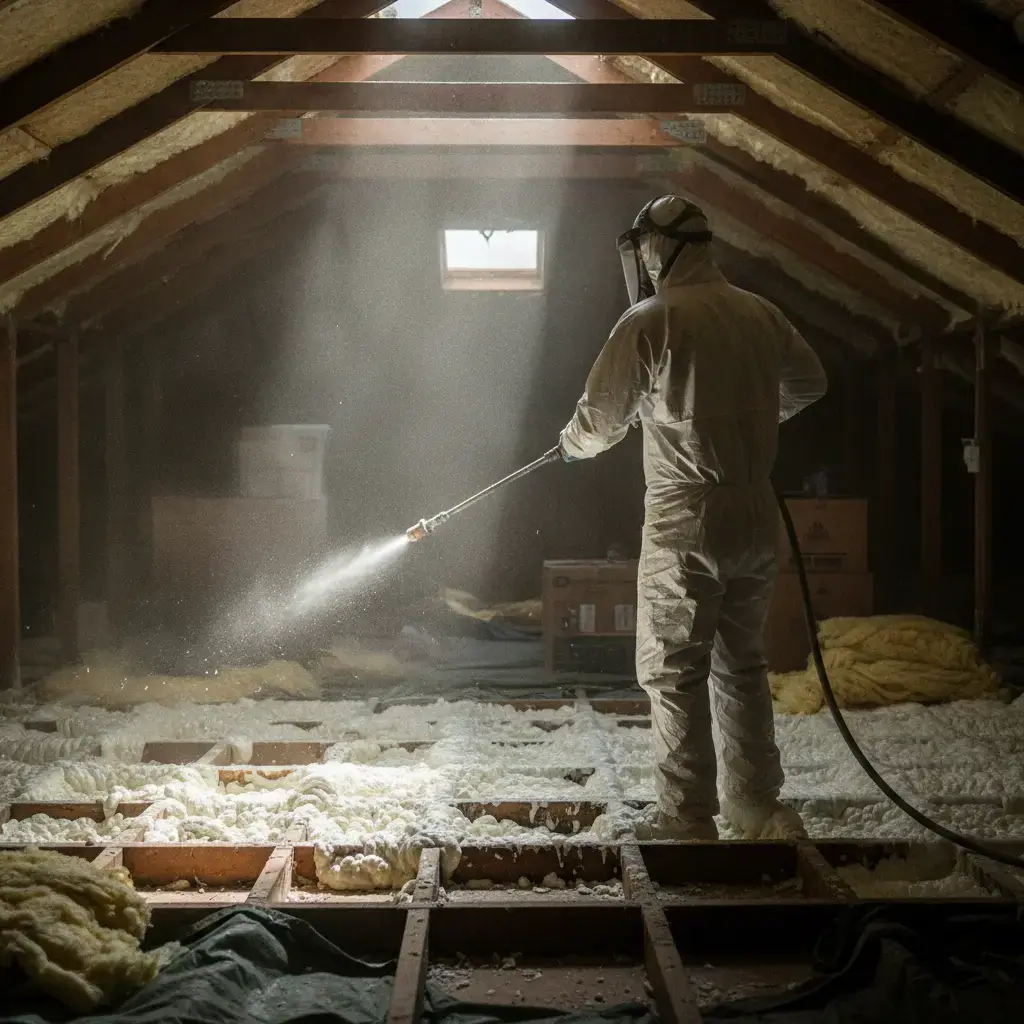
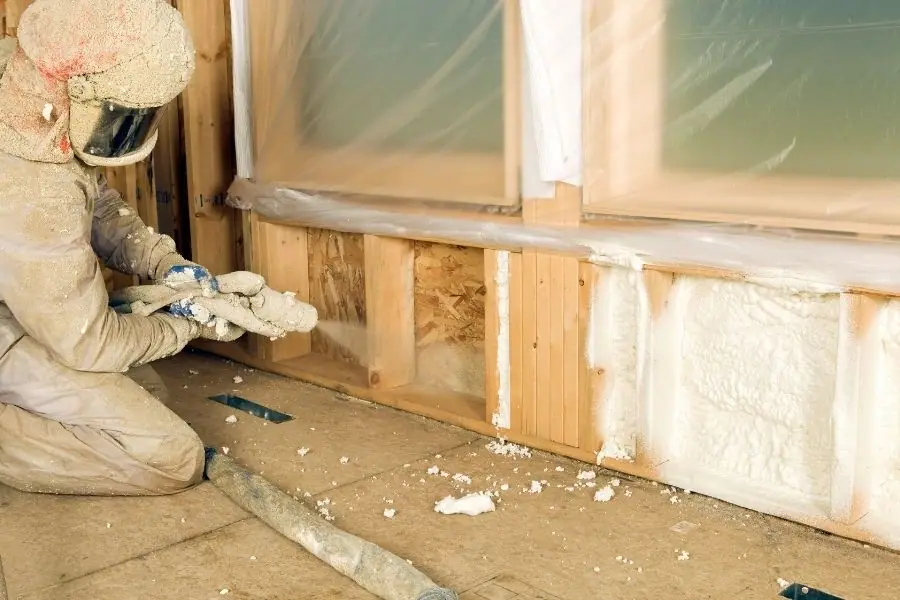
Open-cell and closed-cell spray polyurethane foam are ideal for homes with cathedral ceilings, low-slope roofs, or situations where unvented attic assemblies are preferred. Spray foam adheres directly to roof decking, providing both insulation and air-sealing in a single application. It is especially effective for La Habra’s Spanish-style and ranch homes with complex roof geometries. Learn about our spray foam insulation options
Fiberglass Batt Insulation
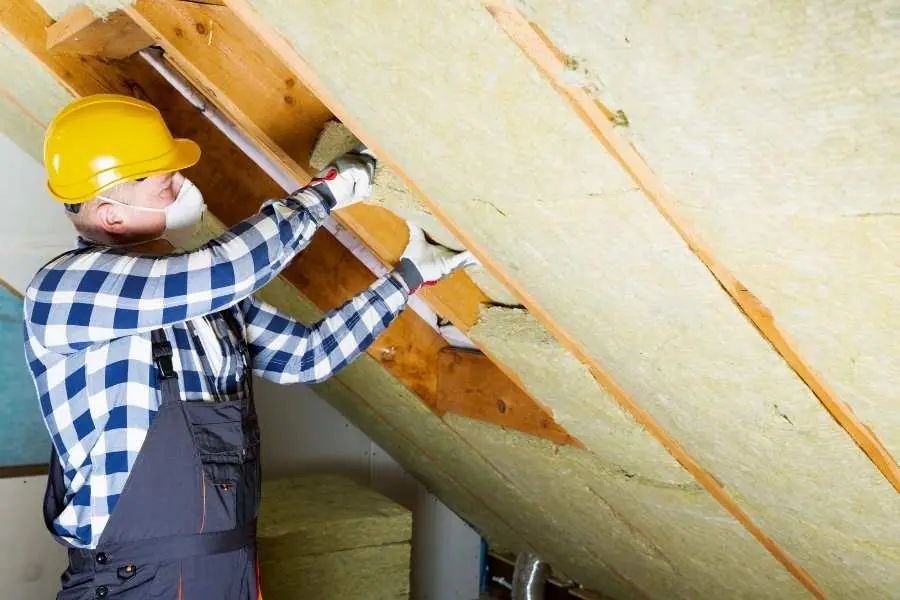
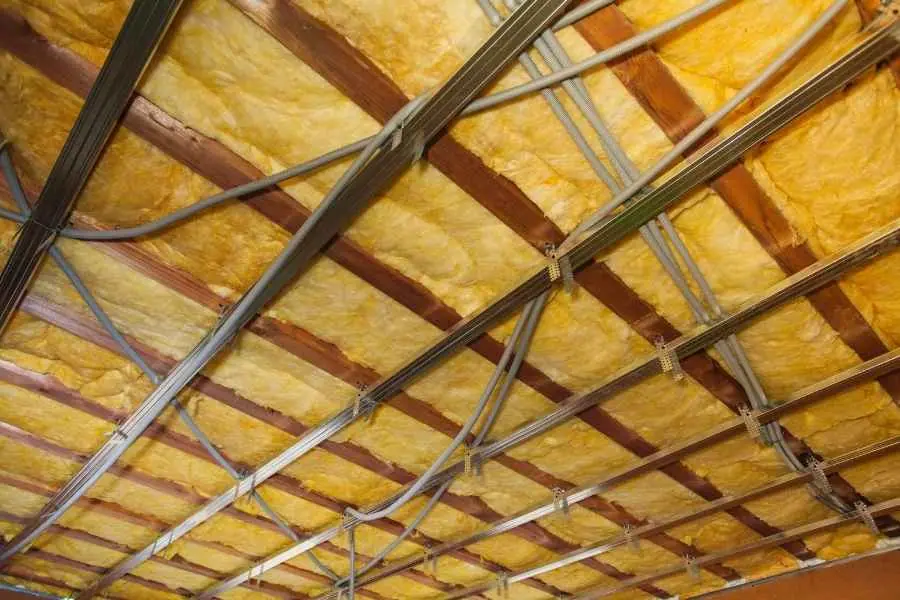
For new construction or open attic framing in La Habra, unfaced or kraft-faced fiberglass batts rated R-19 to R-30 are installed between ceiling joists as a base layer, often combined with a blown-in top coat to achieve target R-values efficiently and cost-effectively. View our attic insulation services
Radiant Barriers
In La Habra’s sun-intensive climate, a radiant barrier — a reflective foil material stapled to the underside of roof rafters — can reduce attic heat gain by up to 25 percent, complementing any of the above insulation methods and improving overall system performance during peak summer months.
Ceiling Insulation Cost in La Habra, CA
Understanding ceiling insulation costs helps La Habra homeowners budget accurately and avoid surprises. Pricing varies based on home size, existing insulation condition, chosen material, and accessibility of your attic space.
Typical Price Ranges
- Blown-in insulation (fiberglass or cellulose): $1.50 to $3.00 per square foot installed. For a typical La Habra 1,500-square-foot single-story home, expect total costs of $2,200 to $4,500 depending on target R-value and whether removal of old material is needed.
- Spray foam insulation: $3.00 to $7.00 per square foot for open-cell; $5.00 to $10.00 per square foot for closed-cell. Full attic spray foam projects in La Habra typically range from $4,000 to $12,000.
- Fiberglass batt installation: $0.50 to $1.50 per square foot for materials and labor in accessible attics.
- Insulation removal (when required): $1.00 to $2.00 per square foot, or $1,500 to $3,000 for most La Habra homes.
Read moreShow less
La Habra-Specific Cost Factors
Homes in La Habra’s hillside neighborhoods near Hacienda Road and La Habra Heights boundaries often have steeper attic pitches or limited access points, which can increase labor costs by 15 to 25 percent. Utility rebates through Southern California Edison’s Energy Upgrade California program can offset costs by $200 to $1,500 depending on the scope of work. Call us at (562) 526-0372 for a precise, no-obligation estimate tailored to your home.
La Habra Neighborhoods We Serve
Central La Habra — Lambert Road and Whittier Boulevard Corridor
This central corridor contains a high density of ranch-style homes built between 1950 and 1965 with shallow attic cavities and original fiberglass batt insulation. Most of these homes are candidates for blow-in insulation upgrades to bring them from R-11 to R-38 or higher.
North La Habra — Westridge and Portola Neighborhoods
Homes in North La Habra’s hillside developments, many built between 1970 and 1990, often feature vaulted ceilings and multi-level layouts that complicate standard blown-in approaches. Spray foam or hybrid insulation systems are frequently the best solution here.
La Habra Heights Adjacent Areas
Properties along the La Habra Heights boundary on Hacienda Road and surrounding streets face elevated pest pressure from the Puente Hills Wildlife Corridor. Insulation removal and replacement combined with pest-proofing measures is a common need in this area.
East La Habra — Imperial Highway Area
This zone includes many late 1940s and early 1950s homes with minimal original insulation and slab foundations. Ceiling insulation upgrades here consistently deliver some of the highest energy savings in the city due to the combination of age, thin original coverage, and high sun exposure. See our full attic insulation services
Ceiling Insulation Maintenance Tips for La Habra Homeowners
- Annual Attic Inspection: Check your attic every fall before La Habra’s rainy season begins (typically November through March) for signs of moisture intrusion, pest activity, or insulation settling.
- Seal Attic Access Hatches: Ensure your attic hatch or pull-down stairs are insulated and weather-stripped to prevent conditioned air from escaping into unconditioned attic space.
- Monitor After Santa Ana Events: Following major wind events, inspect attic spaces for debris infiltration or displacement of blown-in insulation near vents and eave openings.
- Control Attic Moisture: Ensure bathroom and kitchen exhaust fans vent to the exterior — not into the attic — to prevent moisture accumulation that degrades insulation performance.
- Pest Exclusion: Seal any gaps larger than one-quarter inch in roofline and fascia boards to prevent rodents from the Puente Hills corridor from nesting in your insulation.
- Check Insulation Depth: Periodically verify that blown-in insulation has not settled significantly below target depth markers. A drop of more than one to two inches may warrant a top-off application.
- Keep Attic Ventilation Clear: Ensure soffit vents are not blocked by insulation — proper airflow extends insulation life and reduces summer attic temperatures in La Habra’s hot climate.
Why Choose Clean Zone Attic Insulation in La Habra
Clean Zone Attic Insulation is a locally focused insulation contractor serving La Habra and the surrounding communities of Orange and Los Angeles counties. Our team has extensive hands-on experience with the specific building types, climate conditions, and insulation challenges found across La Habra — from the mid-century ranch homes near Lambert Road to the hillside properties along the Hacienda Road corridor.
We offer comprehensive insulation services under one roof, including insulation installation, spray foam insulation, attic insulation, blow-in insulation, crawl space encapsulation, crawl space insulation, insulation removal, and insulation replacement. This means every aspect of your project is handled by our trained team with no subcontracting or coordination confusion.
Read moreShow less
We provide transparent written estimates, detailed post-installation documentation to support utility rebate applications, and a clear communication process from your first phone call to project completion. Our goal is to make ceiling insulation in La Habra straightforward, affordable, and genuinely effective for your specific home.
FAQ
Frequently Asked Questions About Ceiling Insulation in La Habra, CA
How much does ceiling insulation cost in La Habra, CA?
Ceiling insulation costs in La Habra typically range from $1,500 to $6,000 for most single-family homes, depending on the size of your attic, the insulation method chosen, and whether old insulation removal is required. Blown-in insulation for a 1,500-square-foot home averages $2,200 to $4,500 installed. Spray foam projects run higher, from $4,000 to $12,000. We provide free, no-obligation written estimates for every La Habra project.
What R-value do I need for ceiling insulation in La Habra?
The U.S. Department of Energy recommends R-38 to R-60 for ceilings in California’s Climate Zone 9, which includes La Habra. Most older La Habra homes built before 1980 have existing insulation rated at R-11 to R-19, meaning a significant upgrade is typically needed to meet current standards and achieve meaningful energy savings.
How long does ceiling insulation installation take in La Habra?
For most La Habra single-family homes, blown-in insulation installation can be completed in a single day — typically four to eight hours. Projects requiring old insulation removal first may take one to two days total. Spray foam applications vary but are generally completed within one to two days with a cure time of 24 hours before re-occupancy of attic areas.
Does my La Habra home qualify for energy rebates for ceiling insulation?
Many La Habra homeowners qualify for rebates through Southern California Edison’s Energy Upgrade California program and the federal Inflation Reduction Act’s 25C tax credit, which covers 30 percent of insulation costs up to $1,200 annually. Eligibility depends on income level, existing insulation conditions, and the scope of work performed. We can provide the installation documentation required to support your rebate applications.
Is insulation removal necessary before adding new ceiling insulation?
Not always. If existing insulation is structurally intact and not contaminated by moisture, rodents, or mold, adding blown-in insulation on top is a cost-effective approach. However, in many La Habra homes — especially those with pest activity from the Puente Hills corridor or older fiberglass batts that have settled significantly — removal and replacement delivers better long-term results. Our assessment will identify which approach is right for your home.
Can ceiling insulation help with noise reduction in La Habra?
Yes. Dense-pack cellulose and spray foam insulation both provide meaningful acoustic damping, reducing noise transmission from outside and between floors. This is particularly valued by homeowners near La Habra’s busier arterials like Imperial Highway or Lambert Road, where traffic noise is a consistent concern.
How does La Habra’s climate affect which insulation material I should choose?
La Habra’s combination of intense summer heat, periodic Santa Ana wind events, and winter moisture from Pacific storm systems makes material selection important. Closed-cell spray foam offers the best moisture resistance and air-sealing performance, while blown-in cellulose excels at filling irregular attic spaces and provides excellent thermal performance at competitive cost. For most La Habra homes, blown-in cellulose or fiberglass topped with a radiant barrier delivers the best value-to-performance ratio.
Do you serve areas near La Habra?
Yes. In addition to La Habra, Clean Zone Attic Insulation serves Brea, Fullerton, Placentia, Yorba Linda, Buena Park, La Habra Heights, La Mirada, Whittier, and many other communities throughout Orange and Los Angeles counties. View our full service area
Get Your Free Ceiling Insulation Assessment in La Habra Today
Don’t let inadequate ceiling insulation drive up your energy bills through another La Habra summer. Whether your home is a 1950s ranch near Whittier Boulevard or a hillside property along the La Habra Heights corridor, Clean Zone Attic Insulation has the expertise, materials, and local knowledge to deliver a solution that works for your specific home and budget.
Call us now at (562) 526-0372 to schedule your free, no-obligation in-home assessment. Our team serves La Habra and surrounding communities including Brea, Fullerton, Whittier, La Mirada, and La Habra Heights. We are ready to help you achieve a more comfortable, energy-efficient home — starting today.
Schedule Your Free Assessment Online
Get in touch
Find insulation help near you
Request a free estimate online or give us a call — our team will follow up quickly.
- Call us(562) 526-0372
- Visit731 N Beach Blvd, La Habra, CA 90631
- HoursMon-Sun 07:00-19:00